INTRODUCTION
NSAID’s are frequently used and commonly prescribed in humans and animals for reduction in pain, fever and inflammation in rheumatic problems (Geof et al., 2008). Chemically, ketoprofen (KTP) is 2-(3-benzoyl phenyl) propionic acid. Molecular formula is C16H14O3. KTP exists in two enantiomeric forms S and R, which have different half lives. KTP is formulated as racemic mixture. The S(+) enantiomer is associated with prostaglandin inhibition and toxicity and the R(-) enantiomer is linked with analgesic action and protection of gastrointestinal tract. The S(+) isomer, due to chiral inversion dominated in cats, dogs and horses. The R(-) isomer, dominated in sheep. Ketoprofen is approved for use in horses and advised in the inflammatory and pain conditions associated with musculo skeletal problems (Huskisson et al. 1996). Ketoprofen has a wide safety margin and low toxicity compared to phenylbutazone and flunixin meglumine in horses (Mozaffari et al., 2010). Ketoprofen has comparatively a better gastro intestinal safety and has less adverse events than aspirin, phenylbutazone and flunixin meglumin in horses (MacAllister et al. 1993). Favourable pharmacokinetic profile of ketoprofen in humans made it a suitable and effective NSAID for veterinary use. The present project was designed to investigate the pharmacokinetic parameters of KTP in local Pakistani horses after intravenous administration at the dose of 3mg/kg body weight so that we could recommend dosage regime in
this particular specie.
MATERIALS AND METHODS
Animals: Eight healthy male horses with an average weight of 315kg were used in this study. All the horses were tagged and acclimatized to the experimentation area. Food was provided to animals along with water ad libitum. Experimental animals were monitored regularly regarding their health throughout the experiment.
Drugs and Chemicals: Ketoprofen standard (Sigma) was purchased for use as external standard from the company. HPLC grade water, di ethyl ether, acetonitrile (E. Merck Germany) was used. Injection (20ml) of Ketoprofen manufactured by Selmore Pharmaceuticals (Pvt) Limited, Lahore, Pakistan were used during experiment. All the chemicals used were of analytical grade.
Treatment protocol, sampling and drug analysis: An I/V dose of Ketoprofen @ 3 mg/kg body weight was administered via jugular vein into horses. Blood samples (5 ml) were collected in test tubes prior to medication and then at 0.08, 0.17, 0.25, 0.5, 0.75, 1.0, 2.0, 3.0, 4.0, 6.0, 8.0, 10, 12, 24, 48, 60, 72, 84 and 96 hours post medication. Separation of plasma was made by centrifugating blood at 4000 rpm for 10 minutes and stored at −80°C till analyzed.
Extraction of drug: 1.0 ml of 1.0 M hydrochloric acid was added to 1.0 ml of plasma. Vortexed it for 1 minute and then 1.0 ml of HPLC grade di-ethyl ether was added. Vortexed the material again at high speed vortex (4000 rpm) for 10 minutes. The clear supernatant was taken and evaporated to dryness. The dried portion was
reconstituted with 1.0 ml of mobile phase (buffer: acetonitrile 75: 25). Filtered it through 0.22 μm syringe filter and analysis was made.
HPLC analysis: HPLC analysis of ketoprofen in plasma was made with already developed, standardized and validated HPLC method by using Shimadzu LC2000, equipped with a LC-20AT VP pump, a SIL-20AC HT auto-sampler, SPD-M20A, CTO 20 AC and CBM 20A control unit. 20 μl of the sample was run into HPLC system via auto sampler with flow rate of 1 ml/minute. Mixture of phosphate buffer (Di-potassium hydrogen phosphate) and acetonitrile (75:25 v/v) was used as mobile phase. A reversed phase C18 column (Thermo, BDS Hypersil. 5 μm; 4.6 mm × 250 mm) was used as stationary phase. Separation was achieved at 7.0 minutes (retention time) at wavelength of 254nm. Oven temperature was set at 30°C. Ketoprofen in sample was compared with ketoprofen external standard. The discrete peak found in chromatograms of plasma samples of horses was similar to the peak in chromatogram of ketoprofen (external standard) at 7.0 minutes of retention time. The limit of quantification was 0.125μg. The plasma concentration (μg/ml) versus time profile of ketoprofen in horses was prepared semilogarithmically.
Pharmacokinetic Analysis: The computer software APO pharmacological analysis MW /PHARM, Version 3.02, (Holland, 1987) was used for calculation of pharmacokinetic parameters through standard two compartmental analysis. Pharmacokinetic parameters were calculated for horses by use of statistical moment theory. The following equations were used for different calculations: Dose= Cl x AUC
Cl = Dose/AUC; AUMC = MRT x AUC;
Where, AU C = Area under the curve, Cl = Clearance,
MRT = Mean residence time and AUMC =Area under the first moment curve.
Statistical analysis: The software SPSS (Statistical Package for the Social Scientists) 13.0 was used for statistics. The values in the raw data were expressed as individual as well as range, mean, SEM, median and standard deviation.
RESULTS AND DISCUSSION
The group means for plasma concentrations (μg/ml)-time (h) data and pharmacokinetic parameters of ketoprofen were determined at dose of 3mg.kg-1 body weight in horses after intravenous administration. The I/V dose of 3mg/kg body weight of KTP was selected from literature for administration in buffalo calves to achieve that KTP plasma concentration which was likely to have an anti-inflammatory, analgesic and antipyretic effect (Fosse et al., 2010, Neirinckxa et al., 2010, Koshi, 2008, Arifah et al., 2003, Boothe, 2001, Landoni et al., 1999, Paul et al., 1997, Banting et al.,2008). The results are given in Table 1and 2. Plasma concentrations (μg/ml)- time profile of ketoprofen was also prepared and is given in Figure 1.
KTP in horses after I/V administration @ 3mg/kg body weight. (N=8): The Mean + SEM pharmacokinetic parameters of KTP determined in our local healthy horses in this study are, Area under conc. time curve (AUC)= 9.62 ± 1.580 g.h/ml, body clearance (Cl) = 0.304 ± 0.054 l/h/kg, Volume of distribution (VD) =1.25±0.476 l/kg, Volume of distribution at steady state (VDss) =
0.693 ± 0.190 l/kg, plasma half life (t1/2) =2.665 ±0.658 h, and Elimination constant (Kel) =2.129 ±0.366 l/hrs.
Table 1: Group means for plasma conc. time data (µg/ml) of KTP in horses after I/V administration @3mg/kg
body weight. (N=8).
|
TIME (hours)
|
RANGE (µg/ml)
|
MEAN CONCENTRATION (µg/ml)
|
SEM
|
SD
|
CV%
|
MEDIAN
|
|
0.08 0.17 0.25 0.50 0.75 1
2 3 4 6 8
|
8.70-19.80 5.51-12.52 4.42-9.81 2.77-3.93 1.89-2.35 0.96-1.98 0.52-1.92 0.23-1.44 0.93-0.99 0.14-0.47 0.13-0.30
|
15.52 9.46 7.40 3.21 2.09 1.63 1.28 0.88 0.63 0.26 0.17
|
1.41 1.01 0.83 0.19 0.06 0.14 0.20 0.18 0.13 0.05 0.02
|
3.98 2.855 2.357 0.525 0.178 0.394 0.571 0.503 0.365 0.132
0.057
|
25.664 30.18 31.85 16.35 8.13 24.17 44.60 57.15 57.93 50.76 33.52
|
16.26 10.45 7.48 3.075 2.155 1.805 1.475 0.855 0.755 0.225 0.15
|
Rehman et al., J. Anim. Plant Sci. 22(3):2012
Table 2: Group means for PK parameters of KTP in horses after I/V administration @ 3 mg/kg body weight.
(N=8).
|
Pharmacokinetic Parameters
|
Unit
|
Range
|
Mean
|
SEM
|
S.D
|
CV%
|
Median
|
|
AUC
(Area under the curve)
Cl
(Clearance)
VD(Volume of distribution )
VDss(volume of distribution at steady state) HL( t1/2) Half Life
Kel(Elimination constant)
|
µg.h /ml l/hr/k g l/kg l/kg hr l/hr
|
5.92-12.92 0.212-0.466
0.62-2.784 0.428-1.258 1.661-4.487 1.235-2.80
|
9.62 0.304
1.25 0.693 2.665 2.129
|
0.965 0.033
0.291 0.1165 0.4033 0.224
|
2.728 0.095
0.825 0.329 1.140 0.634
|
28.35 31.25
66 47.47 42.77 29.77
|
9.825 0.265
0.774 0.517 2.044 2.287
|
|
| |
|
|
|
|
|
|
|
|
|
|
|
|
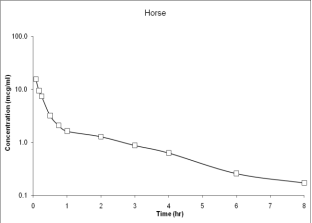
Figure 1: Semilogarithmic plot of group means for
plasma conc. time data (µg/ml) of
The pharmacokinetic parameters like body clearance (Cl) are comparable with donkeys and mares (Oukessou et al., 1996, Sams et al., 2008). The comparatively large value of Volume of distribution (VD) and Volume of distribution at steady state (VDss) may result in fast elimination of drug in horses. The higher drug metabolizing enzyme activities in the liver and other organs of horses have been linked with fast elimination of KTP like antipyrine, ampicillin (Elsheikh, 1997), sulphadimidine (Nouws et al., 1988), isometamidium (Wesongah et al., 2004) and meloxicam (Mehmood et al.,2011) in goats as compared to other species. Heavily protein bound drugs have long plasma half lives (Sindhu and Ram Pal.,2007).The pharmacokinetic parameters observed in horses are different from those reported in literature for horses, dogs, buffalo calves, humans, and laboratory animals.
In this study, dose was also calculated by putting values of AUC and Clearance in formula (Dose= AUC x Cl). In horses it was found to be 2.92mg/kg body weight. The dose was rounded off to 3mg/kg body weight. In the present study, I/V dose of 3mg/kg body weight is suggested in horses. The dose should be repeated after 12
hours in horses. In this study, no toxicity was observed in any animal.
However, it is suggested that clinical trials of ketoprofen should be conducted in horses to assess its MEC (minimum effective concentration) to calculate its activity as an analgesic and anti inflammatory agent. Government of Pakistan should bound pharmaceutical manufacturers to mention specific dosage regimens of ketoprofen for different species on labels of formulations instead of mentioning a generalized dosage regime.
REFERENCES
Alberg. G., V. B. Ciofalo, R. G. Pendleton, G. Ray and D. Weddle (1995). Inversion of (R)- to (S)- ketoprofen in eight animal species. Chirality, 7: 383–387
Arifah, A. K., M. F. Landoni and P. Lees (2003). Pharmacodynamics, chiral pharmacokinetics and PK-PD modeling of ketoprofen in the goat. J. Vet. Pharmacol. There. 26(2): 139-50.
Abransom, S. B and G. Weissman (1989). The mechanisms of action of nonsteroidal anti-inflammatory drugs. Arthr Rheum. 32 (Suppl3):1-9.
Boylan, J. C,. N. Y. Dekker and J. R. Vane (1996). "Introduction: Mechanism of action of NSAIDS. J Rheumatol 35 (suppl. 1): 1-3.
Brooks, P. M and R. O Day (1991). Nonsteroidal anti-inflammatory drugs: differences and similarities. N Engl J Med 324: 1716-1725.
Barhate. P. V., J. H. Patel, U. D. Patel, S. K. Bhavsar, A. J. Dhami and A. M. Thaker (2009). Pharmacokinetics of ketoprofen following intravenous and intramuscular administration in calves. J. Vet. Pharm. Tox. 8 (1/2) 44-47
Boothe, D. M (2001). Veterinary Pharmacology and Therapeutics. 8th Eds. Adams, H.R. pp.433-451. Lowa State University Press. Ames.
Banting. A; S. Banting, K. Heinonen, K. Mustonen (2008). Efficacy of oral and parenteral ketoprofen in lactating cows with endotoxin-
induced acute mastitis. Veterinary Record; 163:506-509
Corveleyn, S., D. Henrist, J. P. Remon, C. Vervaet (1999). Bioavailability of racemic ketoprofen in healthy horses following rectal administration. Res Vet Sci, 67: 203-204.
Delatour, P., E. Benoit, M. Bourdin, M. Gobron and F. Moysan (1993): Comparative enantioselectivity of the disposition of two non-steroidal anti- inflammatory agents ketoprofen and carprofen in man and animals. Bull. Acad. Natl. Med. 177(3): 515-526.
Elsheikh, H. A; Osman, I. A, and Ali, B. H (1997). Comparative pharmacokinetics of ampicillin trihydrate, gentamicin sulphate and oxytetracycline hydrochloride in Nubian goats and desert sheep. J. Vet. Pharmacol. Ther. 20: 262–266.
Garcia M. L., D. Tost, J. Vilageliu, S. Lopez, G. Carganico and D. Mauleon (1998). Bioavailability of S (+)-ketoprofen after oral administration of different mixtures of ketoprofen enantiomers to dogs. J. Clin. Pharmacol. 38 (12, Suppl): 22-26.
Garcia, R. L. A. (1997). Non steroidal anti-inflammatory drugs, ulcers and risk: a collaborative Meta analysis. Semin Arthritis Rheum 26 (6 Suppl 1): 16-20.
Geof, W. Smith., L. Jennifer, Davis, A. Lisa. Tell, I. Alistair. Webb, E. Riviere. Jim (2008). Extra label use of NSAIDs in cattle. JAVMA, Vol.232 (5).
Kantor, T. G. (1986). Ketoprofen: a review of its pharmacologic and clinical properties. Pharmacotherapy. 6 (3): 93-103.
Landoni, M.F and P. Lees (1996). Pharmacokinetics and pharmacodynamics of ketoprofen enantiomers in the horse. Am. Soc. Pharmacol. Exp. Therap. 24 (10): 1050-1057.
Journal of veterinary pharmacology and therapeutics, 19, 466-476
Lees, P.; M. F. Landoni, J. Giraudel and P. L. Toutain (2004): Pharmacodynamics and pharmacokinetics of NSAIDS in species of interest. Journal of Veterinary Pharmacology and Therapeutics. 27: 479–490.
Lees, P.; A. D. Sedgwick and A. J. Higgins (1991): Pharmacodynamics and Pharmacokinetics of meloxicam in the horse. Br Vet J 147: 97-108. Mozaffari, A. A.; A. Derakhshanfar, A. Alinejad and M.
Morovati (2010): A comparative study on the adverse effects of flunixin, ketoprofen and phenylbutazone in miniature donkeys:
Hematological, biochemical and pathological findings. New Zealand Veterinary Journal, 58: 224 - 228.
MacAllister. C., G. Morgan, J. Sheryl, B. T. Agatha and P. A. Robert (1993). Comparison of adverse effects of phenylbutazone, flunixiin meglumin and ketoprofen in horse. JAVMA, 202 (1)
Matthews, N., K. Peck and T. Taylor (1997). Pharmacokinetics of phenylbutazone and its metabolite oxyphenobarbitone in clinically normal horses and donkeys. Am J Vet Res 58: 53-55.
Mahmood, K. T., M. Ashraf, F. Amin, Ikram Ul Haq and Mansoor Ud Din Ahmad (2011). Pharmacokinetics of ecofriendly Meloxicam in healthy goats. J. Pharm. Sci. & Res. 3: 1035- 1041
Nouws, J. F. M., B. P. W. Meesen, H. van Gogh, C. Korstanje, A. S. J. P. M van Miert., T. B.Vree, and M. Degen, (1988). The effect of testosterone and rutting on the metabolism and pharmacokinetics of sulphadimidine in goats. J Vet Pharmacol Therap 11: 145-154.
Oukessou, M., M. Boulijihad, F. Van, Gool and M. Alvinerie (1996). Pharmacokinetics of ketoprofen in the donkey (Equss asinus). Zentralbl. Veterinarmed. A. 43(7): 423-426.
Owens, J. G., S. G. Kamerling and S. A. Barker (1995). Pharmacokinetics of ketoprofen in healthy horses and horses with acute synovitis. J. Vet.
Pharmacol. Ther. 18(3): 187-195
Owens, J. G., S. G. Kamerling, S. R. Stanton (1995).Effects of ketoprofen and phenylbutazone on chronic hoof pain and lameness in the horse. Equine Vet. J. 27(4): 296-300.
Sams, R., D. F. Gerken, S. M. Ashcraft (2008): Pharmacokinetics of ketoprofen after multiple intravenous doses to mares. J. Vet. Pharmacol. Therap. 18 (2): 108-116.
Singh, R. D.; D. Sarita, S. R. Gondaliya, S. K. Bhavsar and A. M. Thaker (2009). The Safety of ketoprofen in Cow calves following repeated intravenous administration. Vet. World. 2 (3): 105-107.
Sindhu, H. S and S. Ram Pal (2007). Essentials of veterinary pharmacology and therapeutics. Pharmacokinetics.Chapter 5 Ist Edition. Kalyani Publishers, New Dehli,India.
Vane, J. R., Y. S. Bakhle and R.M. Botting (1998). Cyclo-oxygenases 1 and 2. Ann Rev Pharmacol Toxicol 38: 97–120.
Wesongah, J. O., T. W. Jones, J. K. Kibugu and G. A. Murilla (2004). A comparative study of the pharmacokinetics of isometamidium chloride in sheep and goats. Small Rumin Res 53: 9–14.