INTRODUCTION
In Pakistan, sheep is the main source of income for the rural poor especially in underdeveloped areas. In addition, sheep have an excellent export potential to earn foreign exchange. Buchi is one of the important hot- region Cholistani (desert area) sheep breeds of Pakistan with specific desirable reproduction, growth, and wool production characteristics that need to be objectively documented to be able to improve its genetic potential. Genetic improvement programs are based on exploitation of genetic variation, identification of superior animals for specific traits or trait combinations, and widespread utilization of these animals in a population. However, the productive and reproductive traits are also influenced by environmental factors that need to be precisely accounted for in order to estimate genetic parameters and to predict genetic values accurately. Among environmental factors, climate and seasonal differences from year to year influence the production of entire flocks, while sex, type of birth, parity, age and weight of dam effect the performance of individuals. It is necessary to precisely estimate the magnitude of these factors so that genetic variation for economically important traits and animal breeding values can be precisely estimated and effective genetic improvement plans implemented. Thus, the
objectives of this study was to estimate the effect of relevant environmental factors on birth weight, weight at about 60 days of age, weaning weight and weaning weight adjusted at 120 days of age.
MATERIALS AND METHODS
- Animals and data: Preweaning growth performance records used in this study were from a flock of Buchi sheep maintained at the Livestock Experiment Station Jugaitpir District Bahawlpur (1986-2010) Punjab, Pakistan. This flock of Buchi sheep started in 1986 through purchases of 300 ewes and 6 rams. Data were recorded in loose papers and then compiled in different registers like birth, live weight, service and lambing registers. Recorded information consisted of ewe, service sire, and lamb identification, date of birth, birth type, birth weight, sex, lamb weight at about 60 days of age, weaning weight, and weaning age. There were a total of 3,564 lambs with records that were the progeny of 1,295 dams and 55 sires. Traits were birth weight, lamb weight at about 60 days of age, weaning weight and weaning weight adjusted to 120 days of age. The identification code for an animal was constructed by concatenating its year of birth, sex, type of birth and tag number of the animal at the farm. From the left side, the animal code
was formed by 2 to 3 digits for the year birth, 1 or 2 for sex (1 = female; 2 = male), 1 or 2 for type of birth (1 = single; 2 = twin) and the last 3 digits for the tag number of the animal at the farm. Because age at weaning varied across lambs, weaning weights were adjusted to 120 days using the following formula:

Age of dam at lambing was computed as the difference between birth dates of the lamb and that of the ewe. Keeping in mind the two breeding seasons, the year was divided into two seasons 1 and 2 (spring and autumn). Dams were grouped into three groups each for parity, age at lambing, and weight at lambing. Dam parity groups were 1 = first and second parity, 2 = third to fifth parity, and 3 = 6 and more parities. The lambing age of dam were grouped as young (< 3.5 years), mature (3.5 to 5.5 years) and old (> 5.5 years). Weights of dams at lambing were grouped as low (< 24 kg), medium (25 to 29 kg) and heavy (> 30 kg). Microsoft Excel was used for data entry and editing.
- Farm location, soil, and climate characteristics: The Livestock Experiment Station at Jugaitpir, District Bahawalpur was established in 1983-84 and is working under the Directorate Livestock Farms, Livestock and Dairy Development Department Punjab, Lahore. It is located at 50 km from Bahawalpur on Bahawalpur-Hasalpur road near Asrani railway station and at a distance of 340 kilometers from the provincial capital Lahore on the south-western side of Punjab, Pakistan. The main purpose of the establishment of the farm was to conserve Cholistani cattle and Buchi sheep and to produce candidate bull calves and quality rams to improve the genetic potential of these breeds. The total area of the farm is 5,200 acres. The land under cultivation is 600 acres, while 4,555 acres of land not fit for cultivation are used for grazing. Lastly, 45 acres are used for building and road construction. The soil is sandy and sandy loam and it is marginally fit for cultivation. The climate is mainly dry and scanty rains may occur from July to September. The average rainfall is 120 mm. Temperatures in summer range from 28oC to 50oC, while winter is somewhat cooler with temperatures ranging from 9oC to 26oC. The cultivated area is under irrigation and the remaining area is barren rangeland.
- Management and feeding practices: Management and feeding practices at the experiment station were similar across years since the introduction of Buchi sheep. Adult animals were maintained in open enclosures throughout the year with adequate covered area to provide shade and shelter during harsh weather. Animals were normally allowed to graze from 7 to 9 hours daily except during harsh weather conditions, wherein animals were retained inside sheds. The normal practice was to allow animals to graze daily on leafy trees
and horny bushes between 5 and 6 hours and on green fodder from 2 to 3 hours daily. Animals were provided a concentrate mixture when range feed was scarce. There were two breeding seasons each year, the first one from February 16th to April 15th and the second one from August 16th to October 15thaimed at getting lambs born in pleasant days and flush seasons. Breeding females were provided a concentrate mixture 45 days before breeding for flushing and 60 days after parturition at a rate of 250 to 500 grams per ewe. Breeding rams were also offered a concentrate mixture at the rate of 500-750 grams during breeding. Young lambs were mostly kept indoors until one month of age. The lambs were allowed to suckle freely through night until the ewes were taken out for grazing in the morning. After one month of age, the lambs remained with their mothers for 24 hours up to weaning. The weaned lambs were shifted to separate pens for post-weaning rearing. The feeding regime was reported to have been similar throughout the years of the study, with some variation from time to time due to climate and shortage of fodders and concentrate during scarce periods. Animals were vaccinated against enterotoxaemia, foot and mouth disease, sheep pox and pleura-pneumonia. Drenching with anthelmintic drugs against internal parasites was routinely done every four months and dipping against external parasites was carried out twice a year.
- Statistical analysis: Data were analyzed to estimate the effect of lamb year and season of birth, sex, type of birth, parity, age of dam at lambing, and weight of dams at lambing on 4 preweaning traits: birth weight, weight at about 60 days of age, weaning weight and weaning weight adjusted to 120 days of age.
The mathematical model used to analyze the 4 preweaning traits can be written as follows:
Yijklmnp= μ + yobi + sobj + sexk + tobl + dalcm + dwlcn + parityp+ (yob*sob)ij + (yob*sex)ik+ (sob*sex)jk + (sob*tob)jl + (sex*tob)
Where
Yijklmnp= observation on a trait
μ = population mean
yobi=year of birth
sobj= season of birth
sexk= sex of lamb
tobl= type of birth
dalcm= age of dam at lambing
dwlcn= weight of dam at lambing
Parityp= dam parity group
(yob*sob)ij= interaction between year and season of birth (yob*sex)ik= interaction between year of birth and sex of lamb (sob*sex)jk = interaction between season of birth and sex of lamb
(sob*tob)jl = interaction between season and type of birth (sex*tob)kl = interaction between sex of lamb and type of birth eijklmnp = random residual associated with each observation with the assumption that it was normally and independently distributed with mean zero and variance σ2
Data were analyzed using the mixed procedure of the Statistical Analysis System (SAS, 2011).
RESULTS AND DISCUSSION
Data description: Means ± SE, standard deviations, minimum and maximum values for the 4 preweaning growth traits are presented in Table 1. The means ± SE were 2.84 ± 0.009 kg for birth weight, 7.64 ± 0.01 kg for weight at around 60 days of age, 12.64 ± 0.02 kg for weaning weight and 12.55 ± 0.03 kg for weaning weight adjusted to 120 days of age. The percentage of single and twin births were 96 and 4 percent, respectively. The sex ratio was 52:48 for males and females.
Environmental factors affecting growth traits: Estimates of environmental factors for the 4 pre-weaning growth traits are presented in Table 2 and discussed below one trait at a time.
- Birth weight: The analysis of variance to evaluate the influence of different environmental sources of variation and interactions between these factors on birth weight is presented in Table 2. Significant effects were obtained for year of birth (P<0.0001), season of birth (P<0.0008), sex of lamb (P<0.0004), type of birth (P<0.0001) and dam parity group (P <0.0497) on birth weight of lamb, while the effects of age and weight of the dam at lambing on birth weight were non-significant. There was also a significant interaction between the year and season of birth (P<0.0001), and between year of birth and sex of lamb (P<0.0001).The significant influence of year, season, sex of lamb and type of birth on birth weight of lamb obtained here was in agreement with results from previous studies in Pakistan in different breeds of sheep (Hissardale, Lohi, Thalli, Mengali and Kajli) kept at different locations and management conditions.(Akhter et al., 2001; Babar et al., 2004; Hussain; 2006; Iram; 2008; Tariq et al., 2010; Farmanullah et al., 2011).The findings of Qureshi et al., (2010) for Kajli and Kakar et al. (2011) for Balochi and Bibrik breeds of sheep were slightly different. In these studies, birth weight was significantly influenced by year of birth, age of dam, sex and birth type. However, the effect of season on birth weight was non-significant. Results from studies conducted in other countries were also in agreement those here. Cloete et al. (1998), Dixit et al. (2001), Mendal et al.(2003), Selvaggi et al.(2011), Thiruvenkadan (2011) and Petrovic et al. (2011) reported that year and season of lambing, sex of lamb, type of birth, and age of dam were significant sources of variation for lamb birth weight in Dhone Merino, Bharat Merino, Muzarnagri, Pulgia, Mecheri and in two Serbian breeds of sheep (Pirot and Svrlijig).The non-significant effect of age of dam on birth weight found here differed from findings in these studies. Similarly, in most of the referenced studies the interaction between year and
season of birth, and the interaction between year of birth and sex of lamb were not estimated. A significant interaction between year and season of birth existed here for birth weight of lamb. This indicated that seasons (spring and autumn) were not the same across years, thus different estimates were obtained for different combinations of years and seasons for this trait. Least squares means for year-season interactions ranged from 2.036 ± 0.061 kg in the spring of 1997 to 3.179 ± 0.08 kg in autumn of 1996. However, Tariq et al. (2010) reported a non-significant interaction between year and season of birth for birth weight in Mengali lambs in Pakistan. Similarly, the significant interaction between year of birth and sex of lamb found in the present study indicated that these two factors were not independent and that sex effects differed across the years. Matica et al. (2003) reported non-significant interactions between year of birth and sex of lamb for birth weight in Sabi sheep in Zimbabwe. Least squares means for the interaction between year of birth and sex of lamb ranged from 2.000 ± 0.155 kg (females born in 1986) to 3.011 ± 0.061 kg (males born in 1998). Figure 1 shows a graphical representation of fluctuations in least squares means for birth weight across years for the spring and autumn seasons. Similarly, Figure 2 shows changes in least squares means for birth weight from 1986 to 2010 for male and female lambs.
The non-significant interaction between sex and birth type was in agreement with the findings of Hussain (2006), Iram (2008) and Farmanullah (2011), but significant interactions of season with sex and birth type differed from results obtained by Hussain (2006) in Thalli sheep. The significant effect of birth type on birth weight estimated here was in agreement with all the referenced studies. This indicated that single born lambs were heavier than twin born lambs as they likely received more nutrients in the womb of their dams than twin born lambs. The difference between least squares means for single and twin born lambs was 0.451 ± 0.043 kg. The significant estimate of dam parity group for this trait indicated that lambs born in parities 3 to 5 were heavier than lambs born in parities 1 and 2andlambs born in parity 6 and later were heavier than lambs born in parities 1 to 5. Mendal (2003), Gbangboche et al. (2006) and Thiruvenkadan (2011) also reported that lambs from ewes of 3rd and 4th parities were heavier than lambs out of parity 1 and 2 ewes in Muzaffernagri, Djallonkeand Mecheri breeds of sheep. BelaandHaile (2009) also reported parity to be a source of variation in different breeds of sheep in Ethiopia for birth weight. The least squares means difference between dam parity group 1 and 2 in the present study was 0.066 ± 0.0466 kg whereas differences in least squares mean between dam parity group 3 and dam parity groups 2 and 1 were 0.047 ± 0.042 and 0.018 ± 0.038 kg, respectively. This indicated that young ewes tended to produce lighter lambs as
compared to matured and older dams which may be attributed to the larger size of the uterus as ewes grew older. Mature ewes after attaining full growth and development could allocate more nutrients to the nourishment of lambs in the uterus than immature ewes. Younger ewes likely utilized a large fraction of the ingested nutrients for their own growth and development and consequently produced lambs of smaller birth weights than older ewes.
- Weight at about 60 days of age: The analysis of variance to evaluate the influences of different environmental sources of variation and interactions between these factors on weight of lamb at around60 days of age is presented in the Table 2. Year of birth (P< 0.0001) and sex of lamb (P<0.0113) affected this trait. Season and type of birth, parity, age and weight of the dam at lambing were non-significant. However, significant interactions existed between year and season of birth (P <0.0001), and between the year of birth and sex of lamb (P<0.0001). Similar results were reported at various locations in different sheep breeds of same type. Akhtar et al. (2001), Matica et al. (2003) and Hussain (2006) reported that year of birth and sex of were significant sources of variation for lamb weight at about 60 days of age in Hissardale, Sabi and Thalli breeds of sheep. In addition, these authors reported significant season, type of birth and age of dam effects that were non-significant in this study. Similarly, Dixit et al. (2001), Borg et al. (2009), Selvaggi et al. (2011) found significant effects for year of birth and sex of lamb as well as birth type weights around 90, 45, and 30 days in Baharet Merino, Western Range sheep and Pulgia lamb. The non-significant effect of birth type here may have been largely due to the low percentage of twins (4%) in
the Buchi population here.
Significant interactions between year and season of birth were found here. This indicated that seasons (spring and autumn) were not the same across the years and different effects were obtained with different combination of the years and seasons on this trait. Least squares means for year-season interactions ranged from 6.887 ± 0.124kg (autumn of 2006) to 8.249 ± 0.083kg (spring of 1994). Similarly, the significant interaction between year of birth and sex of lamb found here indicated that these two factors were not independent and that sex effects differed across the years. However the finding in Sabi sheep was different and Matica et al. (2003) reported non-significant interaction between the year of birth and sex of lamb. Least squares means for the interaction between year and sex ranged from 6.941 ± 0.096 kg(males born in 2006) to 8.278 ± 0.106 kg (males born in 1990). Hussain (2006) also obtained a non- significant interaction between sex and birth type in Thalli sheep, and contrary to results here, he reported significant interactions between seasons and sex and birth
type. Figure 3 presents trends in least squares means for lamb weight at around 60 days of age by seasons across years from 1986 to 2010. In addition, Figure 4 depicts the trends in least squares means for lamb weight at around 60 days of age by sex from 1986 to 2010.
- Weaning weight: The analysis of variance to evaluate the influences of different environmental sources of variation and interactions between these factors on weaning weight is presented in the Table4. The only significant main effect (P < 0.0001) was year of birth. The interactions between year and season of birth, between year of birth and sex and between season of birth and sex were also significant (P < 0.001). All other effects in the model were non-significant. The significant influence of year of birth and sex of lamb on weaning weight obtained here was in agreement with results from previous studies in different breeds of sheep (Dhone Merino, Hissardale, Muzafernagri, Lohi, Kajli, Balochi and Bibrik) kept at different locations and under various management conditions.(Cloete et al; 1998 ; Akhter et al., 2001; Mendal et al., 2003; Babar et al., 2004; Iram; 2008; Qureshi et al., 2010; Farmanullaha., 2011; Kakar et al. 2011).However, contrary to results here, most referenced studies found significant season of birth, birth type and age of dam effects. Similarly, Mendel (2003) and Thiruvenkadan (2011) in Muzaffernagri and Mecheri breeds of sheep in India found significant parity effects as opposed to the non-significance of group parity effects here. Lack of birth type effects for weaning weight may be related to the low percentage of twin births (4%) in this dataset. The non-significant attraction between sex and birth type was also in agreement with results from Iram (2008) in Lohi sheep. A significant interaction between year and season of birth existed for weaning weight. This indicated that the seasons (spring and autumn) were not the same across the years and different effect were observed by the different combination of the years and seasons on this trait. Least squares means for year-season interaction ranged from 11.053 ± 0.186 kg in the spring of 2004 to 14.098 ± 0.269 kg in autumn of 1996. Similarly, the significant interaction between year of birth and sex indicated that these two factors were not independent and that sex effects differed across the years. The least squares means between interactions of season of birth and sex of lamb ranged from 12.652 ± 0.115 kg (females born in spring) to 12.74 ± 0.115 kg (males born in spring) for this trait. Two-way Interactions among other factors in the model here were unavailable in other studies, thus comparisons could not be made. Trends for least squares means for weaning weights by year of birth and season combinations are shown in Figure 5, and by
year of birth and sex of lamb combinations in Figure 6.
- Weaning weight adjusted to 120 days of age: The analysis of variance to evaluate the influences of different environmental sources of variation and
interactions between these factors on weaning weight adjusted to 120 days of age is presented in the Table5. Year of birth (P<0.0001) and sex of lamb (P<0.0165) were important effects for this trait. In addition, significant interactions existed between year and season of birth (P < 0.0001), between year of birth and sex (P<0.0001), between season of birth and sex of the lamb (P<0.0001) and between season of birth and type of birth (P <0.0427). The significant influence of year of birth and sex of lamb obtained here was in agreement with results of previous studies at various locations in different breeds of sheep. Hussain (2006)and Tariq et al. (2010) in Thalli and Mangali breeds of sheep in Pakistan, Ceyhan et al. (2009) and Ozdaret al. (2009) in Sakiz and Turkish Merino breeds of sheep in Turkey and Borg et al. (2009) in Western Rang sheep in USA reported that year of birth and sex of lamb were significant sources of variation for weaning weight adjusted to 120 days of age. In Iran, Kesbi et al. (2007), Rashidi et al. (2008) and Lawf and Noshery (2008) also reported the similar results in Kermani, Mehrban and Lori breeds of sheep. However
these referenced studies reported significant effects of season of birth, type of birth and age of dam for this trait which contrary to results here.
Results here also showed significant year of birth by season of birth interactions. This indicated that the seasons (spring and autumn) were not the same across years, thus year-season combination estimates differed over time. Saghi et al. (2007) reported similar results in Baluchi sheep in Iran. Least squares means for year- season combinations ranged from 10.745 ± 0.218 kg (spring of 2004) to 14.565 ± 0.309 kg (autumn of 1996). Similarly, the significant interaction between year of birth and sex of lamb found here indicated that these two factors were not independent and that sex effects differed across the years. Least squares means for the interaction between year and sex ranged from 10.86 ± 0.192 kg (males born in 2007) to 14.415 ± 0.291 kg (females born in 1996). Trends for least squares means for weaning weights adjusted to 120 days of age by year of birth and season combinations are shown in Figure 7, and by year of birth and sex of lamb combinations in Figure 8.
that the single lambs born in autumn were 0.619 ± 296 kg heavier than twin lambs born in the same season. However, twins born in the spring season were0.079 ± 174 kg heavier than singles born in the same season. Hussain (2006) also reported non-significant interactions between sex and type of birth in Thalli sheep in agreement with results here.
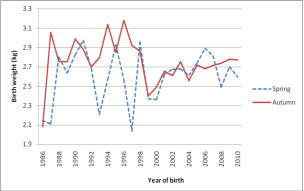
Figure 1. Least squares means for birth weight by
year-season combination
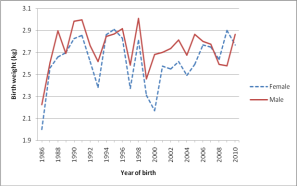
Figure 2. Least squares means for birth weight by
year-sex combination
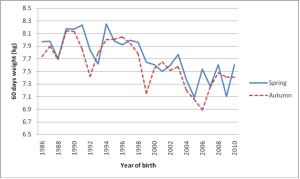
Figure 3. Least squares means for lamb weight at
around 60 days of age by year of birth-season combination
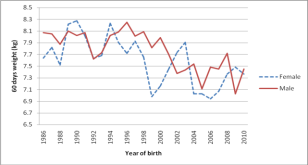
Figure 4. Least squares means for lamb weight at
around 60 days of age by year of birth-sex combination
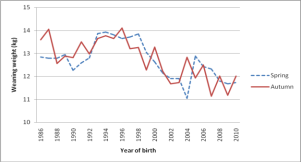
Figure 5. Least squares means for weaning weight by year of birth-season combination
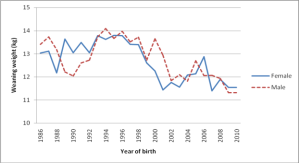
Figure 6. Least squares means for weaning weight by year of birth-sex combination
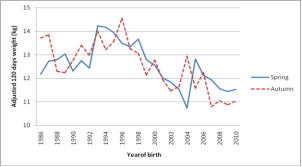
Figure 7. Least squares means for weaning weight
adjusted to 120 days of age by year of birth-
season combination
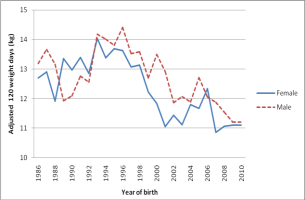
Figure 8. Least squares means for weaning weight
adjusted to 120 days of age by year of birth- sex combination
Conclusions: The variation in least squares means for preweaning traits in Buchi sheep across years due to interactions between year of birth, season of birth, sex of lamb and type of birth found here may have been due to the combined effects of climate (e.g., temperature and humidity), feeding conditions (e.g., type and availability of feed), and sheep management influenced by staff training and availability. To maintain a reasonably productive and profitable sheep production system with Buchi sheep, feeding and management would need to be flexible to effectively respond to changes in type and availability of range feed with climate fluctuations.
REFERENCES
Akhtar, P., Z. Ahmad, G. Mohiuddin, S. Ali, and K. Javed (2001). Environmental factors affecting pre-weaning growth traits of Hissardale sheep in Pakistan. Pakistan Vet. J., 21 (1): 17-21.
Babar, M. E., Z. Ahmad, A. Nadeem, and M. Yaqoob (2004). Environmental factors affecting birth weight in Lohi sheep. Pakistan Vet. J., 24 (1): 5- 8.
Bela, B., and A. Haile (2009). Factors affecting growth performance of sheep under village management conditions in the south western part of Ethiopia.
Livest. Res. Rural Dev.21 (11); 128 – 185.
Borg, R. C., D. R. Notter, and R. W. Kott (2009). Phenotypic and genetic associations between lamb growth traits and adult ewe body weights
in Western Range sheep. J. Anim. Sci. 87(11):3506–3514.
Cloete, S. W. P., A. J. Scholtz and B. B. Aucamp (1998). Environmental affect, heritability estimates and genetic trends in a Western Cape Dhone Merino nucleus flock. South African J. Anim. Sci. 31 (2): 123–130.
Ceyhan, A., T. Sezenler, and I. Erdoğan (2009). The estimation of variance components for prolificacy and growth traits of Sakız sheep. Livest. Sci.122: 68–72.
Dixit,S. P., J. S. Dhillon, and G. Sing (2001). Genetic and non-genetic parameter growth trait Merino Baharet sheep. Small Ruminant Res. 42: 101- 104.
Farmnullah (2011). Genetic and phenotypic trends in some performance traits of Kajli sheep. M. Phil (ABG) Thesis. Department of Livestock Production, University of Veterinary and Animal Science Lahore, Pakistan.
Hussain, A. (2006). Genetic evaluation of Thalli sheep in Pakistan. Ph. D. Thesis. Department of Animal Breeding & Genetics, University of Agriculture Faisalabad, Pakistan.
Gbangboche, A. B., A. K. I. Youssao, M. Senou, N. Adamou, F. Ahissou, C. Michaux, A. Abiola,and L. Leroyz (2006). Examination of non-genetic factors affecting the growth performance of Djallonke sheep in Sudanian zone at the Okpara breeding farm of Benin. Trop. Anim. Health Prod. 38 (1):55-64.
Iram, A. (2008). Within flock genetic and phenotypic trends for some performance traits in Lohi sheep. M. Phil (ABG) Thesis. Department of Livestock Production, University of Veterinary and Animal Science Lahore, Pakistan.
Kakar, M. S., M. M. Tariq, A. Waheed, M. A. Bajwa, M. A. Ewan, M. A. Kakar, F.A. Bukhari, I. B. Marghazani, N. Rashid, H. Tahir, M. Shafee, and Y. Javed (2011). Evaluation of economic traits of Balochi and Bibrik (Beverigh) sheep breeds of Baluchistan, Pakistan. Iğdır Univ. J. Inst. Sci. Tech. 1(2): 133–139.
Kesbi, F.G., M. Eskandarinasab, and A. Hassanabadi (2008). Estimation of genetic parameters for lamb weight at various ages in Mehraban sheep. Ital. J. Anim.Sci.7: 95-103.
Lawaf, A. and A. Noshary (2008). Estimation of genetic parameters and environmental factors on early growth traits for Lori breed of sheep using single trait Animal Model. Pakistan J. Biol. Sci., 11 (1): 74–79.
Matika, O., J. B. V. Wyk, G. J. Eramus, and R. L. Baker (2003). Genetic parameter estimates in Sabi sheep. Livest. Prod. Sci.79: 17–28.
Mandal, A. K., P. Pant, D. K. Nandy, P. K. Rout and R. Roy (2003). Genetic analysis of growth traits in Muzaffarnagari sheep. Trop. Anim. Health Prod. 35 (3): 271– 284.
Petrovic, M. P., D. R. Muslic, V. C. Petrovic, and N. Maksimovic (2011). Influence of environmental factors on birth weight variability of indigenous Serbian breeds of sheep. African J. Biol. 10(22): 4673- 4676.
Qureshi, M. A., M. E. Babar and A. Ali (2010). Environmental and genetic factors influencing performance traits of Kajli sheep in Pakistan. Pakistan J. Zoology 42(4): 339 – 343.
Rashidi, A., M. S. Mokhtari,A. S. Jahanshahi, and A. M. R. Mohammad (2008). Genetic parameter estimates of preweaning growth traits in Kermani sheep. Small Ruminant Res.74:165– 171.
Saghi, D. A., H. Khadivi, M. Nadvidzadeh, and M. Nikbakhti (2007). Study on influence of environmental effects on birth weight, weaning weight and daily growth of Baluchi Sheep. Pakistan J. Nutr. 6(5):436-437.
Selvaggi, M.,F. Pinto, A. R. P. Delfino, A. Vicenti, and C. Dario (2011). Phenotypic and genetic parameters of preweaning growth traits in Gentile di Puglia Lamb. World Aca d. Sci. Eng. Tech. 78:476 – 478.
SAS, 1995. SAS/STAT user's Guide (version 9.3). SAS Inst. Inc. 2011, Cary, NC.
Ozder, M., T. Sezenler, A. Refik, A. Ceyhan (2009). Genetic and non-genetic parameter estimates for growth traits in Turkish Merino lambs. J. Anim. Vet. Adv. 8(9): 1729 – 1734.
Tariq, M. M., M. A. Bajwa, F. Abbas, A. Waheed, F. A. Bokhari, and M. Rafiq (2010). Heritability of pre-weaning growth performance traits in Mengali sheep in (Balochistan). Pakistan. Inter. J. Biol. Cons. 2(10): 284 – 288.
Thiruvenkadan, A. K., K. Karunanithi, J. Muralidharan, and B. R. Narendra (2011). Genetic analysis of pre-weaning and post weaning growth traits of Mecheri sheep under dry land farming conditions. Asian-Aust. J. Anim. Sci., 24(8): 1041 – 1047.