INTRODUCTION
An estimated 37.5 million people in Pakistan are undernourished and 40% children are underweight, and nursing mothers and infants have been identified as most exposed to hunger and nutritional deficiency (FAO 2008). As the country grapples with the modernization of its agricultural practices, the present study identifies an important area of biotechnological intervention where the fortification of cattle milk with an Omega-3 fatty acid can improve the nutritional status of this a major food source in Pakistan.
Omega-3 fatty acids, known for their health benefits since the 1930s, came to prominence after the discovery an unusual fatty acid, now identified as docosahexaenoic acid, in the surveillance of blood from the Arctic’s Inuit (Eskimo) known globally for highly healthy heart functions with extremely low high failure rates. Docosahexaenoic acid (DHA), an omega-3 fatty acid with a 22-carbon chain, occurs in salmon and other fish sources, which the Inuit hunt and ingest as staple food (Leaf 2008). Omega-3 rich fish oil preparations, including the best seller Lovaza pills, are now a multibillion-dollar business, and their sale has been increasing steadily worldwide.
New research shows DHA as the primary building block of brain and eye (Innis 2008). The human brain is composed of about 60% fat, and 25-35% of fatty acid in the brain is DHA. Even greater concentration of DHA is found in the retina of human eye, comprising 50-60% (Mukherjee et al. 2007). These dramatic findings have now placed DHA in a central position of the vital human functions, heart, mind, and vision.
A diet rich in omega-3 fatty acids is important for providing the body with healthy fats. The fatty acid metabolism in humans is quite complex, and when the cells and organs of the human are unable to obtain fatty acids that are essential and they can not synthesize enough on their own (Burdge 2005), the cells will try to replace these fatty acids with other fatty acids that are similar, but these replacements can actually be harmful. A deprivation of omega-3 fatty acids often leads to a high level of replacement by structurally similar omega 6 fatty acids, and this fatty acid substitution has been found to be high in patients suffering from depression or Attention Deficit Disorder. This clearly shows the importance of allocating sufficient amounts of DHA to the brain particularly at the early stages of the child development when most of the grey matter is formed in humans.
The infant brain is about 30% of the adult brain size, and by the age 3 it grows to the 80% of the adult size. An adequate intake of DHA is therefore is critical at the very early stages of human brain development. It is now generally accepted that normal DHA levels are key to the mental development of infants and for the mental function of children and adults throughout life (Innes 2008). DHA has been suggested to increases focus and reason, improves attention and memory, provides mental stability, reduces depression and anxiety, reduces the risk of heart attack and controls blood pressure, reduces inflammation and relieves arthritis pain, reduces hyperactivity and prevents ADHD, improves vision, and prevent cancer, Alzheimer, an old age disease characterized by loss of neurons and synapses, has been associated with low levels of DHA (Reynold 2006). With so much that is dependant on DHA, a dietary intake of DHA is essential for human health. DHA can be synthesized by humans from α-linolenic acid (ALA), however, the enzymes responsible for converting dietary ALA to DHA work very slowly to be physiologically significant (Burdge 200%). This means humans must rely on the dietary intake of DHA for most of their metabolic needs.
In the United State, the Food and Drug Administration (FDA) recommends a daily intake of 160 mg of DHA for healthy adults, and the optimal intake of DHA during pregnancy and breastfeeding is 300 mg per day. Similarly, American Medical Association has recently issued a general recommendation of 220 mg per day for children and healthy adults.
The fears that Pakistani diet is deficient in DHA have been justified in an international survey showing one of the lowest levels of DHA in the breast milk of new mothers and the erythrocytes of their children found in Pakistan (Smita et al., 2000a). Importantly, in an accompanying study, the authors have demonstrated that the fish oil supplements given to mothers improved DHA status of their malnourished infants (Smita et al., 2000b). Interestingly, low DHA levels in the breast milk have also been found in the well in inland areas with low marine consumption of otherwise fed developed areas of the world including Canada, South Africa, and the Netherland (Brenna et al., 2007).
This alarming disparity in the levels of DHA in the breast milk of mothers in different parts of Canada has led the Neilson® Dairy to bring naturally fortified milk to the market containing 10 milligrams of DHA per serving of 250 ml, where the milk has been fortified naturally (Zandbergen 2004). Neilson’s milk is the product of a customized milk fortification developed by adding DHA rich herring meal to the cattle feed. The DHA absorbed by the animal and secreted into the milk was enough to raise the level of DHA to about 40 mg per liter; those consuming the milk get easy access to DHA. The customized feed developed by the researchers provides for the natural enrichment of DHA in cows’ milk at levels that parallel those found in the milk of nursing mothers.
University of Guelph study suggests that DHA in the feed is less susceptible to biohydrogenation than other polyunsaturated fatty acids (PUFAs) are. That means PUFAs could pass through the gut unaltered and be converted in part to DHA.
Fortified milk can also be an important source of DHA for Pakistan, which is one of the largest dairy producers in the world, and where dairy milk is a major source of dietary nutrients available to both children and adults. Dairy milk contains zero to trace amounts of DHA. Grass fed cattle get some unsaturated fatty acids in their diet, but the amount of DHA they obtained from the plant sources is extremely low, which adds only a trace amount of DHA in their milk.
The Canadian model of milk fortification is only party applicable in Pakistan. Unlike Canada, Pakistan does not have an abundance of seafood, and therefore an economical supplementation of cattle feed with seafood sources of DHA such as shrimp meal is not feasible in Pakistan. One has to find alternate sources for DHA-containing natural material, and our study seeks to employ DHA-rich algal species as a readily cultivable and economical source for preparing DHA-rich cattle feed in Pakistan.
There have been attempts recently to use microalgae to alter the fatty acid profile of the fed animal. Or-Rashid et al. (2008) tried an algal meal supplementation for stimulating the microbial metabolism in the rumen, which they thought would lead to milk fortification, however, the microbial component used in this study was unable to generate DHA for the fortification of the cattle milk. As with herring meal, the selection of DHA rich marine algal species in the present study would ensure a supplementation of cattle feed with DHA. Among red algae, Schizochytrium limacinum has been used as a microbial source of polyunsaturated fatty acids (PUFA) in dietary supplements (Chi et al., 2009), and recently, a more prolific producer of PUFA has been identified as Crypthecodinium cohnii (Mendes 2009). Crypthecodinium cohnii is now a popular commercial source of DHA and its pharmaceutical preparations have been approved by regulatory agencies both in Europe and North America. Another algal species known for its DHA content is Arthrospira platensis, commonly known as Spirulina (Spolaore et al. 2006). Arthrospira platensis is also an excellent source of protein and can be considered in custom designing the cattle feed.
Feed supplementation protocol: Our initial focus will be on the red micro-algae Crypthecodinium cohnii, especially on the strains that have been recently characterized with highest DHA accumulation. Our rationale of using this red dinoflagellate is consistent with the work of Schiavonea et al. (2007) that has demonstrated that a diet supplementation with 5 g/kg C. cohnii meal can result in a significant increase of DHA content of Muscovy duck’s breast meat.
Crypthecodinium cohnii is a non photosynthetic heterotrophic marine micro-alga that can be grown on synthetic media containing glucose, yeast extract and sea salt. Higher than 50% seawater salt concentrations is required for optimal growth and lipid accumulation. The optimal glucose concentration is 25 grams per liter and it can tolerate up to 84.3 gram glucose per liter. The optimal temperature for DHA production is 25°C (de Swaaf et al. 1999). In a batch culture with ethanol as the carbon source, the alga produced 83 gram dry per liter biomass, 35 gram per liter total lipids and 11.7 gram per liter DHA during an incubation period of 220 hours. The overall volumetric productivity of DHA was 53 mg per liter per hour (de Swaaf et al. 2003). Crypthecodinium cohnii has also been modeled for bioreactor production. Its biomass concentration increases from 1.5 to 27.7 gram per liter in 74 h. In the final 41 h of the process the lipid content of the biomass increases from 7.5 to 13.5%. In this period the percentage of DHA of the lipid increases from 36.5 to 43.6%. The total amounts of lipid and DHA after 91 h is reported to be 3.7 and 1.6 gram per liter, respectively.
Crypthecodinium cohnii can also be cultivated in open fields. Mass cultivation of microalgae in open ponds is the oldest and simplest system that uses a shallow pond about one-foot deep, and allows the culture to grow under conditions identical to the algal natural environment.
The ponds design (Figure 1) is based on a raceway configuration and a paddlewheel is used to circulate and mix the algal cells and nutrients. The raceways dug into the earth are either enforced with poured concrete or lined with a plastic liner to prevent the ground from soaking up the liquid. This channeled structure guides the flow around in a controlled and regulated manner.
The high yielding potential of C. cohnii under laboratory and field conditions makes the DHA prolific strains of this red alga particularly suitable for supplementing the cattle feed for DHA fortification. Our study is aimed at cattle feed formulations (Table 1) prepared with algal meal supplementation in which DHA from C. cohnii can be added naturally to the dairy milk. This phase of the study will focus on seasonal feeding habits and the ambient environmental conditions to develop tested protocols for DHA fortification of milk in all major breeds of dairy cattle raised in the region.
A feeding protocol is being developed to add DHA to cow and water buffalo milk produced in Pakistan. The method employs field grown Crypthecodinium cohnii as an algal source of DHA in the cattle feed prepared during berseem and maize fodder seasons. The method relies on open pond cultivation of C. cohnii for integrating the algal meal production in the urban and peri-urban dairying systems of Pakistan. The proposed biotechnological intervention is intended to provide an adequate dietary source of an essential polyunsaturated fatty acid.
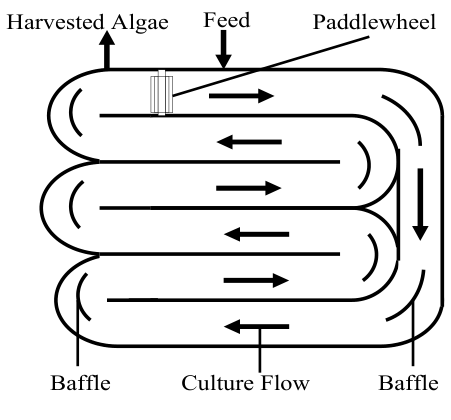
Figure 1. Schematic open pond system for Crypthecodinium cohnii culture.
Table 1. Crypthecodinium cohnii meal supplementation of dairy feed. | Forage Type | Wet algal meal Supplementation g/kg daily feed | Dried algal meal Supplementation g/kg daily feed |
|---|
| Dry fodder | 20 | 5 |
| Winter annuals | 40 | 10 |
| Summer annuals | 40 | 10 |
| Perennial fodder | 30 | 7.5 |
REFERENCES
Burdge G. C. and Calder P. C. (2005). Conversion of alpha-linolenic acid to longer-chain polyunsaturated fatty acids in human adults. Reprod. Nutr. Dev. 45: 581–597.
Chi Z., L. Yan L., C. Frear, and S. Chen. (2009). Study of a two-stage growth of DHA-producing marine algae Schizochytrium limacinum SR21 with shifting dissolved oxygen level. Applied Microbiol Biotechnol. 81: 1141-1148.
FAO. (2008). The State of Food Insecurity in the World 2008: High Food Prices and Food Security - Threats and Opportunities. Published by the Food and Agriculture Organization of the United Nations. Viale delle Terme di Caracalla, 00153 Rome, Italy, 56 page.
Innis S. M. (2008). Dietary omega 3 fatty acids and the developing brain. Brain Res. 27; 35-43.
Leaf A. (2008). Historical overview of n-3 fatty acids and coronary heart disease. Am J Clin Nutr; 87:2010S-2S.
Mendes A., P.Guerra, V. Madeira, F. Ruano, T. L. da Silva, and A. Reis. (2009) Study of docosahexaenoic acid production by the heterotrophic microalga Crypthecodinium cohnii CCMP 316 using carob pulp as a promising carbon source. W.J. Microbiol. Biotechnol. 23: 1209-1215.
Mukherjee P. K., A. Chawla, M. S. Loayza, and N. G. Bazan. (2007). Docosanoids are multifunctional regulators of neural cell integrity and fate: significance in aging and disease. Proc Natl Acad Sci U S A. 104:13152-7.
Or-Rashid M. M., J. K. G. Kramer, M. A. Wood, and B. W. McBride. (2008). Supplemental algal meal alters the ruminal trans-18:1 fatty acid and conjugated linoleic acid composition in cattle. J. Anim Sci. 2008. 86:187-196.
Reynolds, J. E. III., D. L. Wetzel and. T. M. O’Hara, (2006). Human Health Implications of Omega-3 and Omega-6 Fatty Acids in Blubber of the Bowhead Whale (Balaena mysticetus). Arctic 59: 155– 164
Spolaore P., C. Joannis-Cassan, E. Duran, and A. Isambert. (2006). Commercial Applications of Microalgae. J. Bioscience and Bioengineering 101: 87–96.
Schiavonea, R, M. Chiarinib, A. Marzonib, S. C. Tassonec, and I. Rombolib. (2007). Breast meat traits of Muscovy ducks fed on a microalga (Crypthecodinium cohnii) meal supplemented diet. British Poultry Science 48: 573 – 579.
de Swaaf M., De Rijk T. C., Eggink G., Sijtsma L. (1999). Optimisation of docosahexaenoic acid production in batch cultivations by Crypthecodinium cohnii. J. Biotechnol.70:1-3.
de Swaaf M., J. Pronk, and L. Sijtsma. (2003). Fed-batch cultivation of the docosahexaenoic-acid-producing marine alga Crypthecodinium cohnii on ethanol. Appl Microbiol Biotech. 61: 41-43
Zandbergen N. (2004). Holy mackerel! It's Dairy Oh! Eastern Ontario AgriNews www. agrinewsinteractive. com/ archives/ article-6055.htm. Retrieved Nauary 26, 2012.