INTRODUCTION
The Oriental armyworm, Mythimna separata (Walker) (Lepidoptera: Noctuidae), is a highly destructive migratory pest responsible for causing 20-60% yield and economic losses in major cereal crops globally (Solangi et al., 2021; Lv et al., 2022; Xu et al., 2023). Cross-generational (parental) effects represent a form of phenotypic plasticity in which environmental conditions experienced by the parents exert non-genetic influences on the phenotypes of their offsprings (Solangi et al., 2025). Such parental effects are often viewed as evolutionary optimization processes that increase the adaptation of offspring to future environments (Rotem et al., 2003) and influence short-term responses to selection and provide adaptive benefits in fluctuating environmental conditions (Pettersen et al., 2024).
Numerous studies have demonstrated that parental environments strongly influence offspring phenotypes (Nijhout, 2003; Simpson et al., 2011; Ferrer et al., 2013; Bautista and Crespel, 2021) with evidence that these effects frequently impact on the life-history traits or physiological attributes associated with offspring fitness, temperature regulates developmental rates, body size, fecundity, and survival (Hoffmann et al., 2003; Sinclair et al., 2003). Parental thermal environments have shown to produce diverse phenotypic consequences for offsprings in many insect taxa (Uller, 2008; Cavieres et al., 2019). Moreover, both developmental and acclimation temperatures are known to shape insect phenotypes, as reported in species such as Bicyclus anynana (Butler) and Grapholita molesta (Busck) (Atkinson et al., 2001). Ambient temperature is widely recognized as a major ecological driver and a key selective force influencing ectotherm performance (Clarke, 2003). In insects, developmental temperature has been linked to adult life-history traits including body size, reproductive investment, and locomotor capacity (Chidawanyika and Terblanche, 2011). Although most studies emphasize direct thermal effects within a generation, evidence also points to transgenerational impacts, especially maternal influences on offspring’s phenotype (Richards, 2006). Several hypotheses have been proposed to explain cross-generational responses to temperature (Ferrer et al., 2013; Bonduriansky and Crean, 2018). The adaptive matching hypothesis predicts that offsprings achieve higher fitness when their environment resembles that of their parents (Solangi et al., 2021). Cold temperatures during the adult stage generally extend the lifespan of insects but result in reduced fecundity (Mołoń et al., 2020; Shi et al., 2025). Conversely, the hypothesis “hotter-parents-are-better” claims that parents developing at high temperatures, though smaller in body size and positively affect offspring fitness across various conditions (Gilchrist and Huey, 2001). While the evolutionary relevance of parental effects is increasingly acknowledged there is still a lack of studies explicitly testing such influences (Lindholm et al., 2006). In particular, the cross-generational consequences of temperature remain insufficiently investigated (Stillwell and Fox, 2005; Solangi et al., 2025). Temperature fluctuations occurring on daily and seasonal scales strongly influence various aspects of insect’s biology, including development, behavior, and reproduction (Bautista and Crespel, 2021). Epigenetic inheritance across one or more generations, expressed as inter- and trans-generational plasticity (Morag et al., 2011), can either buffer organisms against these stresses or amplify their effects (Dea et al., 2016). Adaptive parental effects occur when parents use environmental cues to adjust offspring phenotypes in ways that improve fitness in the anticipated environment (Scott and Marshall 2011). For instance, exposure of mothers to cooler temperatures often results in larger, more cold-tolerant offspring. However, the consequences of such plasticity are highly context dependent (Pettersen et al., 2019). Elevated temperatures can accelerate ectotherm metabolic rates, intensifying energetic trade-offs and magnifying fitness costs under nutritionally limited conditions (Bautista and Crespel, (2021); Pettersen et al., 2024). Within this framework, the effects of parental rearing temperature, as well as offspring developmental and adult temperatures, on development time, pupal mass, pre-oviposition period, flight ability, and adult lifespan were evaluated. Particular attention was given to cross-generational effects on flight performance in M. separata.
MATERIALS AND METHODS
Stock culture: The eggs of M. separata were collected from a large, outbred laboratory population (maintained at 300-400 individuals per generation) at the Institute of Plant Protection, Chinese Academy of Agricultural Sciences (CAAS), Beijing, China. Newly hatched larvae (10-20 siblings per jar) were reared on maize leaves until pupation and adult emergence. Insects were maintained in a controlled-environment chamber at 24 ± 1 °C, 70% relative humidity (RH), and a photo period of 14L:10D. These rearing conditions prevented diapause and ensured maximum survival, development, and reproductive success. On the day of adult emergence (day 0, between 09:00 and 12:00 h), 56 virgin females were randomly selected from the stock culture and placed individually in 1.5-L plastic boxes, each supplied with a 2-ml vial containing 10% honey solution (w/v). Later the same day, a non-sibling virgin male was introduced into each box. Mating pairs were left undisturbed until oviposition began. Food was replenished daily, and cages were inspected for the presence of eggs.
Experimental insects: Insects were obtained from the stock culture and reared for two successive generations: the parental and the offspring generation. Parental individuals were maintained throughout their lifetime at either 18 °C, referred to as low temperature, or 30°C, referred to as high temperature, and referred to as low and high parental temperatures (TP), respectively. Offsprings from each parental treatment were divided into two groups and reared from egg to adult at either 18°C or 30°C (low and high developmental temperatures (TD). After adult emergence, individuals were again divided and maintained at either 18°C or 30°C (low and high adult temperatures (TA). This full factorial design resulted in fourteen distinct treatment combinations (2 × 4 × 8 TP × TD × TA). To minimize genetic bias, 200 replicate families were established and reared separately (Fig. 1). Eggs produced by females on the 4th–5th day of adulthood were collected, randomly assigned to one of the two parental temperature treatments (TP), and reared up to adult. From each TP group, 150 females were randomly selected and paired with a virgin male reared under the same TP. The eggs produced by these pairs (again on days 4-5) were then evenly divided between the two developmental temperature treatments (TD). From each TD group, more than 150 females were sampled and paired with males from the same family and developmental temperature, after which the resulting adults were split into two adult temperature treatments (TA). In total, 150 mating pairs were established for each adult temperature treatment.
Measurement of offspring life-history traits
Developmental time and pupal mass: For each TP × TD combination, >150 females were randomly selected per family, and developmental time (days) was recorded from oviposition to adult emergence, including egg, larval, and pupal stages. Three-day-old pupae from all treatments were weighed using an electronic balance (A&D, Tokyo, Japan) and placed individually in 48-cm³ plastic boxes. Pupae were checked daily, and the date of adult emergence was recorded.
Fecundity and longevity: For the measurement of egg production and adult lifespan, 150 females were assigned to each TP × TD × TA treatment combination. Females were paired with males and kept in 1.5-L boxes provided with a 10% honey solution. Fresh food was provided daily, and oviposition was recorded. Eggs were collected and counted daily, providing estimates of fecundity. Adult longevity was measured from emergence until natural death (Ferrer et al., 2013).
Pre-oviposition period: Pre-oviposition period (POP) was determined for all TP × TD × TA combinations. Newly emerged females and males were paired in 1.5-L boxes with a 10% honey solution. Cages were checked daily for oviposition. POP was defined as the interval between adult emergence and the date of first oviposition (Kong et al., 2010).
Flight performance: Flight performance was quantified using a computer-assisted 32-channel flight mill system. One-day-old female moths were selected, and over 50 individuals were tested per treatment group. Moths were lightly anesthetized in a glass tube (2-8 cm) containing an ether-soaked cotton wick. Tethers were made from 0.25-mm diameter copper wire with a 1-mm loop at one end and a 2-cm straight section. After removing scales and hairs from the metathorax–abdomen junction, the loop was attached with 502 superglues. Tethered moths were held in 50-ml vials until mounted on the flight mill. Flight tests were conducted overnight (19:00-07:00 h) in a dark climate chamber under 70 ± 10% R.H. at either 18 °C or 30 °C, conditions simulating natural migratory activity of M. separata (Feng et al., 2004). Flight parameters, including total flight duration (min), distance (km), and mean velocity (km/h), were automatically recorded.
Statistical analysis: Generalized linear mixed models (GLMMs) were used to test the effects of temperature treatments on life-history traits. Developmental time and pupal mass were modeled using a normal error distribution, with TP and TD as fixed factors. Fecundity and adult lifespan were analyzed using the Poisson distribution with TP, TD, and TA as fixed factors. Flight performance parameters (flight duration, distance, and velocity) were analyzed under normal distribution with TP, TD, and TA as fixed factors and family as a random factor. All fixed-factor interactions were included in the models. Post hoc comparisons were performed using least significant difference (LSD) tests. Analyses were conducted in SPSS version 21 (IBM SPSS Statistics, Chicago, IL, USA), using the GLMM procedure.
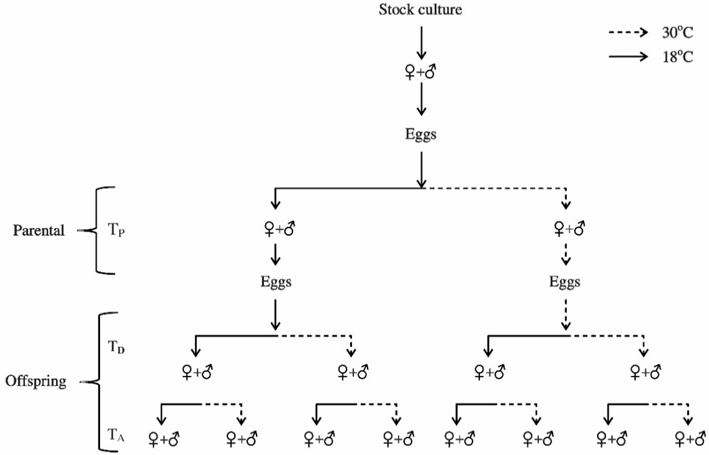
Figure 1. Experimental design, showing the 200 replicate families of different temperature regimes for the M. separata parental and offspring rearing under laboratory conditions
RESULTS
Development time (Days): Parental temperature (TP), offspring developmental temperature (TD), and their interaction had significant effects on the developmental duration of M. separata (Fig. 2 A; Table 1). Overall, larvae reared at high TD developed considerably faster than those reared at low TD (30.88 ± 2.17 vs. 64.98 ± 6.23 days). The effect of TP was context-dependent: at high TD, developmental time did not differ between offsprings of high- and low-TP parents (30.88 ± 5.36 vs. 33.06 ± 4.48 days). GLMMs analysis revealed that the main effect of TP was significant (df =1217, F=40.56, P≤.0.001), as well as a significant interaction (df =1217, F=34.62, P≤.0.001) between TP and TD was observed. In contrast, at low TD, offsprings derived from high-TP parents completed development more rapidly than those from low-TP parents (64.98 ± 6.58 vs. 66.11 ± 7.15 days) with significant (df =1217, F=28.62, P≤.0.001) main effect of TD. These results indicate that parental rearing temperature modifies offspring development, but the magnitude of this effect is strongly mediated by the temperature experienced during offspring development.

|
Figure 2. Impact of parental and offspring developmental temperature on the offspring development duration (days) (A), and pupal mass (mg) (B) in M. separata.
|
Pupal mass: Pupal mass exhibited significant variation in response to both TP and TD with significant interaction (df =12,71; F=9.78, P≤.0.001) (Fig. 2 B; Table 1). Offsprings originating from adults maintained under lower TP attained substantially greater pupal mass compared with those derived from parents reared at high TP (331.92 ± 8.04 mg vs. 261.11 ± 9.6 mg) and the main effect was significant (df =12,71; F=8.34, P≤.0.002). Similarly, larvae under cooler TD conditions produced heavier pupae than those reared under higher TD (281.46 ± 5.13 mg vs. 241.64 ± 4.34 mg).
Pre-oviposition period: Females originating from high-TP parents exhibited a shorter pre-oviposition period compared to those from low-TP parents, and this effect was particularly pronounced in individuals reared at low developmental temperature (low TD: 4.91 ± 0.21 days at low TP vs. 4.09 ± 0.15 days at high TP). In contrast, females developing at high temperature (high TD) showed a moderate reduction in pre-oviposition time with increasing TP (6.51 ± 0.50 days at low TP vs. 6.03 ± 0.27 days at high TP). A significant (df =12,14; F=6.90, P≤.0.001) TD × TA interaction revealed that adult thermal conditions modified the expression of pre-oviposition duration. When females were reared under high TD, the difference between low and high TA was relatively small, with developmental durations 4.74±0.25 and 4.44±0.31 days, respectively. Conversely, females reared under low TD exhibited a more pronounced response to TA, with longer pre-oviposition periods at low TA (6.46 ± 0.23 days) compared to high TA (5.81 days) with significant (df =12,14; F=7.36, P≤.0.001) TP ×TD ×TA interaction. These results indicate that both parental and developmental thermal treatments interact with adult ambient conditions shaped reproductive timing in M. separata, with stronger cross-generational effects expressed under cooler developmental environments (Fig. 3 A; Table 2).

|
Figure 3. Impact of parental, developmental, and adult temperature on the female pre-oviposition (days) (A), and on female fecundity (B) in the M. separata.
|
Fecundity: Lifetime egg production was significantly (df =12,14; F=9.40, P≤.0.001) influenced by TP and offspring’s adult temperature (TA), with additional contributions from developmental temperature (TD) and their interactions. The TP×TD and TD× TA interactions were highly significant (df=12,14; F=6.32, P≤0.0001) and (df =12,14; F=5.32, P≤0.001) indicating complex cross-generational and within-generation thermal effects on reproductive output. Females derived from parents exposed to high TP consistently produced more eggs than those from low TP parents, and this difference was most pronounced in individuals reared at low developmental temperatures. Specifically, low TD females laid an average of 464.04 ± 26.31 eggs under low TP, compared to 404 ± 23.22 eggs under high TP. In contrast, high TD females showed a stronger reduction in fecundity when parental temperature increased, produced 471.68 ± 27.51 eggs under low TP and only 348 ± 23.21 eggs under high TP. Adult acclimation conditions further modified reproductive investment. Across treatments, females generally deposited more eggs at higher TA compared to lower TA. However, the magnitude of this response varied with developmental temperature. High TD females exhibited a significant difference between low and high TA (443.92 ± 23.11 vs. 410 ± 31.56 eggs, respectively), whereas low TD females showed a more pronounced response, with fecundity decreasing from 556.96 ± 23.58 eggs at low TA to 506.08 ± 27.89 eggs at high TA. These findings highlight the interactive influence of parental, developmental, and adult thermal environments on fecundity in M. separata, demonstrating that reproductive output is shaped by both cross-generational plasticity and direct thermal acclimation with significant TP×TD×TA interaction (df =12,14; F=12.3, P≤0.001) (Fig. 3 B; Table 2).

Figure 4. Impact of parental, developmental, and adult temperature on the total flight duration (minutes) (A) and flight distance (km) (B) on M. separata.
Flight potential: Three major flight parameters, total flight duration (min), flight distance (km), and flight velocity (km/h), were strongly influenced by these cross-generational and within-generation thermal environments. A significant (df =12,14; F= 2.36, P≤.0.001) TP × TD interaction was observed in flight duration; females derived from high TP parents exhibited prolonged flight compared to those from low TP parents (282.14±14.51 vs. 225.14 ± 14.54 min., respectively). Similarly, individuals reared at high developmental temperature sustained longer flights (298.48 ± 9.09 min) relative to low TD counterparts (249.12 ± 14.19 min). In contrast, low TD females from high TP families performed substantially better (258.53 ± 13.84 min) than those from low TP families (180.53 ± 12.45 min), highlighting strong cross-generational plasticity. High TP females traveled significantly farther than low TP females (16.35 ± 1.02 vs. 10.71 ± 0.78 km). Also, developmental temperature affected (df = 12, 14; F = 3.65, P ≤0.024) flight distance, with high-TD females exhibiting shorter travel distances than low-TD females. The TD × TA interaction was non-significant (df =12,14; F= 0.23, P≤.0.814), indicating a limited influence of TA. Flight velocity differed significantly between TP lines, with females from the high-TP line flying faster than those from the low-TP line (df = 12, 14; F = 33.12; P≤0.009). Developmental temperature (TD) also influenced flight velocity (df = 12, 14; F = 4.86; P≤0.065). Females reared under low TD reached a higher mean velocity (3.21 ± 0.10 km/h) compared to females reared under high TD (2.36 ± 0.06 km/h). Overall, females originating from high TP parents and reared at high TD maintained greater flight performance across adult duration. In contrast, offspring from low TP families exhibited marked declines in flight capacity under both low and high TA regimes with significant TP ×TD ×TA interaction (df = 12, 14; F = 7.36, P ≤ 0.0001). These findings emphasize the ecological relevance of cross-generational thermal plasticity in shaping migratory ability in M. separata with significant TP ×TD ×TA interaction (df =12,14; F= 6.66, P≤0.001) (Figs. 4 A, B, & 5 A; Table 3).

Figure 5. Impact of parental, developmental, and adult temperature on the total flight speed (km/h) (A) and female longevity (Days) (B) on M. separata.
Longevity: The adult lifespan of M. separata females was significantly (df = 12, 14; F = 9.45, P ≤.0001) influenced by TD, TA, and TP, with a strong three-way (TP×TD×TA) significant interaction (df = 12, 14; F = 13.92, P ≤ 0.0001). Females reared at high developmental temperatures reduced longevity compared to those developed under low TD conditions (9.85 ± 0.17 vs. 10.25 ± 0.27 days). Whereas long adult lifespan was observed at high TA relative to low TA (11.02 ± 0.51 vs. 12.04 ± 0.84 days) with significant TD × TA interaction (df =12,14; F =6.12, P≤ 0.0003). These findings indicate that thermal conditions experienced during parental, developmental, and adult stages collectively influence female lifespan, suggesting that longevity in M. separata is regulated by complex interactions across and within generations (Fig. 5 B; Table 2).
Table 1. Results of the GLMMs for the effects of parental temperature (TP), offspring developmental temperature (TD), on the developmental time and pupal mass in M. separata.
|
|
Development time
|
|
Pupal mass
|
| |
df
|
F
|
P
|
|
Df
|
F
|
P
|
|
T p
|
1,217
|
40.56
|
≤0.001
|
1,217
|
8.37
|
≤0.001
|
|
TD
|
1,217
|
28.12
|
≤0.001
|
1,217
|
7.85
|
0.002
|
|
TP × TD
|
1,217
|
34.62
|
≤0.001
|
1,217
|
9.78
|
≤0.001
|
Table 2. Results of GLMMs for the effects of parental temperature (TP), offspring developmental temperature (TD), and offspring adult temperature (TA), on the pre-oviposition period, fecundity, and longevity in M. separata females.
|
|
Pre-oviposition period
|
Fecundity
|
Longevity
|
| |
df
|
F
|
P
|
df
|
F
|
P
|
Df
|
F
|
P
|
|
TP
|
1,214
|
3.12
|
0.006
|
1,214
|
9.40
|
≤0.001
|
1,214
|
33.12
|
0.009
|
|
TD
|
1,214
|
11.25
|
≤0.001
|
1,214
|
10.39
|
0.002
|
1,214
|
3.05
|
0.028
|
|
TA
|
1,214
|
3.56
|
0.002
|
1,214
|
5.15
|
0.006
|
1,214
|
4.86
|
0.065
|
|
TP × TD
|
1,214
|
9.56
|
≤0.001
|
1,214
|
6.32
|
≤0.001
|
1,214
|
9.52
|
≤0.001
|
|
TD ×TA
|
1,214
|
6.9
|
≤0.001
|
1,214
|
5.23
|
≤0.001
|
1,214
|
6.12
|
0.003
|
|
TP ×TD ×TA
|
1,214
|
7.36
|
≤0.001
|
1,214
|
12.3
|
≤0.001
|
1,214
|
13.92
|
≤0.001
|
Table 3. Results of the GLMMs for the effects of parental temperature (TP), offspring developmental temperature (TD), and offspring adult temperature (TA), on the flight performance in M. separata females.
|
|
Total flight duration
|
|
Total flight distance
|
|
Velocity
|
| |
df
|
F
|
P
|
|
df
|
F
|
P
|
|
df
|
F
|
P
|
|
TP
|
1,214
|
33.26
|
≤0.001
|
|
1,214
|
9.95
|
≤0.001
|
|
1,214
|
6.63
|
≤0.001
|
|
TD
|
1,214
|
1.3
|
0.263
|
|
1,214
|
3.65
|
0.024
|
|
1,214
|
4.21
|
0.028
|
|
TA
|
1,214
|
0.7
|
0.365
|
|
1,214
|
2.56
|
0.015
|
|
1,214
|
0.1
|
0.924
|
|
TP × TD
|
1,214
|
2.36
|
≤0.001
|
|
1,214
|
4.25
|
≤0.001
|
|
1,214
|
2.69
|
≤0.001
|
|
TD × TA
|
1,214
|
6.66
|
≤0.001
|
|
1,214
|
0.23
|
0.814
|
|
1,214
|
1.23
|
0.049
|
|
TP ×TD ×TA
|
1,214
|
2.36
|
≤0.001
|
|
1,214
|
5.3
|
≤0.001
|
|
1,214
|
6.3
|
≤0.001
|
| |
|
|
|
|
|
|
|
|
|
|
|
|
Significant P-values (P≤0.05) are given in bold type in all tables.
DISCUSSION
Parental, developmental, and adult acclimation temperatures significantly influenced the life-history traits of M. separata. Offspring derived from parents reared at higher temperatures developed more rapidly when exposed to warmer developmental temperatures, indicating a transgenerational thermal effect. This response suggests that parental thermal environments can modulate offspring performance under similar thermal regimes. Similar temperature-mediated developmental plasticity has been reported in several lepidopterans, including Grapholita molesta, Manduca sexta, and Cabera exanthemata, where parental or developmental temperature affected offspring growth rate and reproductive plasticity (Notter-Hausmann and Dorn, 2010; Ferrer et al., 2013; Woods, 2013; Kivelä et al., 2012; Gibbs et al., 2010). Across treatments, progeny originating from low-temperature parents showed longer developmental duration and heavier pupal mass than those from high-temperature parents. This pattern is similar to the temperature-size relationship widely reported in ectotherms, where cooler developmental conditions promote increased body size. Similar trends have been documented in Drosophila melanogaster and other insects, demonstrating that lower thermal environments prolong development but enhance biomass accumulation (Gilchrist and Huey, 2001; Honek, 1993; Fischer et al., 2003a). These observations further align with the temperature-size rule (TSR), which predicts larger body size at lower developmental temperatures due to extended growth duration and reduced metabolic rate (Angilletta and Dunham, 2003; Kingsolver and Huey, 2008; Fischer and Karl, 2010). Parental temperature also influenced reproductive performance, females derived from warm parental environments produced more eggs during their lifetime compared with those from cooler parental conditions. This pattern suggests enhanced reproductive investment under warm parental regimes and may reflect faster maturation and increased metabolic activity. Similar findings were reported by Gilchrist and Huey (2001), although some studies have documented reduced fecundity under persistently high temperatures across generations (Huey et al., 1995). In contrast, previous studies indicate that fecundity responses to parental temperature are species-specific and may depend on interactions with developmental and adult environments. Moreover, the influence of parental temperature on reproductive output has received less attention than within-generation temperature effects, and previous studies often reported weak paternal contributions to offspring performance (Huey et al., 1995; Steigenga and Fischer, 2005). Furthermore, research on butterflies has demonstrated that warmer environments can enhance activity, fecundity, and reproductive maturation, thereby supporting improved fitness under favorable thermal conditions (Clusella-Trullas et al., 2007; Ellers and Boggs, 2004; Roland, 2006).
Females from warm parental environments also showed shorter pre-oviposition duration, faster development, and improved flight performance compared with those derived from cooler parental temperatures. In contrast, low parental temperature combined with cooler adult conditions reduced longevity, reproductive success, and dispersal capacity. These findings suggest that parental thermal history influences both reproductive traits and dispersal behavior. Similar temperature-dependent effects on longevity and performance have been reported in G. molesta, although parental effects were less pronounced in that species (Ferrer et al., 2013; Uller, 2008). Flight mill experiments further demonstrated interactive effects of parental, developmental, and adult temperatures on dispersal capacity. Females derived from warm parental environments exhibited longer flight duration and greater flight distance, supporting the “hotter-parents-are-better” hypothesis. This hypothesis proposes that individuals originating from warmer parental environments may gain performance advantages under fluctuating thermal conditions. These findings are consistent with the fitness framework proposed by Ferrer et al. (2013), which emphasizes rapid development and early reproduction as adaptive strategies in varying environments. However, although fecundity and flight performance were enhanced under warm parental environments, pupal mass increased under cooler parental conditions. This trade-off indicates that parental temperature effects are not uniformly beneficial across all fitness traits. Similar antagonistic responses have been documented in D. melanogaster, where high parental temperatures improved thermal resistance but reduced body size (Crill et al., 1996). These contrasting responses provide partial support for both the “hotter-parents-are-better” and “colder-parents-are-better” hypotheses, depending on the trait considered. Consequently, no single parental temperature appears universally optimal for all life-history characteristics. Overall, the present findings highlight strong cross-generational thermal plasticity in M. separata. Such plasticity may enable rapid ecological adjustment to fluctuating thermal environments by modifying development, reproduction, and dispersal traits. This mechanism is particularly relevant for migratory pests, where reproductive investment and dispersal capacity must be balanced to ensure population persistence across heterogeneous habitats. Future research should focus on identifying the physiological mechanisms underlying parental temperature effects, validating these responses under field conditions, and incorporating thermal plasticity into predictive models of pest outbreaks.
Conclusion: Thermal conditions across generations intensely influence development, reproduction, and flight traits in M. separata. Warm parental environments accelerated development and increased reproductive and flight performance, while cool parental environments produced larger pupae, demonstrating trait-specific and opposing parental effects. These interactions highlight the ecological importance of cross-generational thermal plasticity in this migratory pest. Such insights are essential for predicting population responses to climate variability.
Acknowledgement: This research was financially supported by the National Key Research and Development Program of China (2024YFD0113000), 2022YFD1400600, China Agriculture Research System of MOF and MARA (CARS-08) and Government Procurement of Public Services of MARA (2026).
REFERENCES
Angilletta, M.J and A.E. Dunham (2003). The temperature-size rule in ectotherms: simple evolutionary explanations may not be general. Am. Nat. 162: 332-342. doi: 10.1086/377187.
Atkinson, D., S.A. Morley, Weetman, D and R.N. Hughes (2001). Offspring size responses to maternal temperature in ectotherms. In: Atkinson, D., Thorndyke, M. (Eds.), Environment and Animal Development: Genes, Life Histories, Plasticity. BIOS Scientific Publishers, Oxford, pp. 269-286.
Bautista, N.M and A. Crespel (2021). Within- and Trans-Generational Environmental Adaptation to Climate Change: Perspectives and New Challenges. Front. Mar. Sci. 8: 1-10. doi: 10.3389/fmars.2021.729194.
Bonduriansky, R and A. J. Crean (2018). What are parental condition-transfer effects and how can they be detected? Methods Ecol. Evol. 9: 450-456. doi:10. 1111/2041-210X.12848.
Cavieres, G., J. M. Alruiz., N. R. Medina., Bogdanovich, J. M and F. Bozinovic (2019). Transgenerational and within-generation plasticity shape thermal performance curves. Eco. and Evo. 9 (4): 2072-2082. doi: https://doi.org/10.1002/ece3.4900.
Crill, W. D., R.B. Huey and G.W. Gilchrist (1996). Within-and between-generation effects of temperature on the morphology and physiology of Drosophila melanogaster. Evol. 50: 1205-1218. Doi:/abs/10.1111/j.1558-5646.1996.tb02361.x
Clarke, A. (2003). Costs and consequences of evolutionary temperature adaptation. Trends Ecol. Evol. 18: 573-581. Doi:10.1016/j.tree.2003.08.007.
Clusella-Trullas, S., Wyk, J. H and J. R. Spotila (2007). Thermal melanism in ectotherms. J. Therm. Bio. 32: 235-245.
Doi:10.1016/j.jtherbio.2007.01.013.
Chidawanyika, F and J.S. Terblanche (2011). Costs and benefits of thermal acclimation for codling moth, Cydia pomonella (Lepidoptera: Tortricidae): implications for pest control and the sterile insect release program. Evol. Appl. 4: 534-544. doi.org/10.1111/j.1752-4571.2010. 00168.x.
Dea, R.E., D.W.A. Noble, S.L. Johnson, Hesselson, D and S. Nakagawa (2016). The role of non- genetic inheritance in evolutionary rescue: epigenetic buffering, heritable bet hedging and epigenetic traps. Environ. Epigenet. 2 (1): 146-158. doi: 10.1093/eep/dvv014.
Ellers, J and C. L. Boggs (2004). Functional ecological implications of intraspecific differences in wing melanization in Colias butterflies. Biol. J. Linn. Soci. 82: 79-87. Doi:10.1111/j.1095-8312.2004. 00319.x.
Feng, H.Q., K.M. Wu, Cheng, D.F and Y.Y. Guo (2004). Spring migration and summer dispersal of Loxostege sticticalis (Lepidoptera: Pyralidae) and other insects observed with radar in Northern China. Environ. Entomol. 33: 1253-1265. doi: 10.1603/0046-225X- 33.5.1253.
Ferrer, A., S. Dorn and D. Mazz (2013). Cross-generational effects of temperature on flight performance, and associated life-history traits in an insect. J. Evol. Biol. 26: 2321-2330.doi: 10.1111/jeb.12218.
Fischer, K., Brakefield, P.M and B.J. Zwaan (2003a). Plasticity in butterfly size: why larger offspring at lower temperatures? Ecology 84:3138-3147. doi.org/10.1890/02-0733.
Fischer, K and I. Karl (2010). Exploring plastic and genetic responses to temperature variation using copper butterflies. Clim. Res. 43:17-30. doi.org/10.3354/cr00892.
Gibbs, M., Breuker, C.J and H. V. Dyck (2010). Flight during oviposition reduces maternal egg provisioning and influences offspring development in Pararge aegeria (L.). Physiol. Entomol. 35:29-39. https://doi.org/10.1111/j.1365-3032.2009.00706.x.
Gilchrist, G.W andR.B. Huey (2001). Parental and developmental temperature effects on the thermal dependence of fitness in Drosophila melanogaster. Evolution. 55 (1): 209-214. doi: 10.1111/j.0014-3820. 2001.tb01287. x.
Honek, A. (1993). Intraspecific variation in body size and fecundity in insects: a general relationship. Oikos. 66: 483-492. https://doi.org/10.2307/3544943.
Hoffmann, A.A., J.G. Sørensen and V. Loeschcke (2003). Adaptation to temperature extremes using Drosophila as a model system: bringing together quantitative and molecular approaches. J. Therm. Biol. 28: 175-216. DOI:10.1016/S0306-4565(02)00057-8.
Kivela, S.M., Valimaki, P and M.I. Maenpaa (2012). Genetic and phenotypic variation in juvenile development in relation to temperature and developmental pathway in a geometrid moth. J. Evol. Biol. 25: 881-891.doi: 10.1111/j.1420-9101.2012.02478. x.
Kingsolver, J.G and R.B Huey (2008). Size, temperature, and fitness: three rules. Evol. Ecol. Res.10: 251-268. https://www.evolutionary-ecology.com/abstracts/v10/2242.html.
Kong, H., Y. Zhang, S. Zhu, Y. Kong, Wu, L and R. Hu (2013). Effects of larval density on growth, development, and reproduction of diamondback moth (DBM), Plutella xylostella L. J. Eco. Agric. 21: 474-479. doi: 10.3390/insects11120857.
Lv, W., L. Zeng, Z. Zhang, H. He, F. Wang and X. Xie (2022). Effects of Juvenile Hormone Analog and Days after Emergence on the Reproduction of oriental armyworm, Mythimna separata (Lepidoptera: Noctuidae) Pop. Insect. 13 (6): 506. doi: 10.3390/insects13060506.
Lindholm, A. K. (2006). Where do all the maternal effects go? Variation in offspring body size through ontogeny in the live bearing fish Poecilia parae. Biol. Let. 2: 586-589. doi: 10.1098/rsbl.2006.0546.
Mołoń, M. J. Dampc, M. Kula-Maximenko, J. Zebrowski, A. Mołoń, R. Dobler, Durak, R andA. Skoczowski (2020). Effects of Temperature on Lifespan of Drosophila melanogaster from Different Genetic Backgrounds: Links between Metabolic Rate and Longevity. Insects. 11 (8): 1.18. DOI: 10.3390/insects11080470.
Notter-Hausmann, C and S. Dorn (2010). Relationship between behavior and physiology in an invasive pest species: oviposition site selection and temperature-dependent development of the oriental fruit moth (Lepidoptera: Tortricidae). Environ. Entomol. 39: 561-569. DOI:10.1603/EN09231.
Morag, N. T. Keasar, Harari, A and A. Bouskila (2011). Trans-generational effects of maternal rearing density on offspring development time in a parasitoid wasp. Phys. Ent. 36: 294- 298. doi: 10.1111/j.1365-3032.2011.00781. x.
Nijhout, H.F. (2003). Development and evolution of adaptive polyphenisms. Evol. Dev. 5:9-18. doi: 10.1046/j.1525-142x.2003.03003. x.
Pettersen, A.K., C.R. White, Bryson-Richardson, R.J and D.J. Marshall (2019). Linking life- history theory and metabolic theory explains the offspring size-temperature relationship. Ecol. Lett. 22: 518–526. doi:10.1111/ele.13213.
Pettersen, A.K., N.B. Metcalfe and F. Seebacher (2024). Intergenerational plasticity aligns with temperature-dependent selection on offspring metabolic rates. Phil. Trans. R. Soc. B 379: 20220496. doi: https://doi.org/10.1098/rstb.2022.0496.
Richards, E.J. (2006) Inherited epigenetic variation-revisiting soft inheritance. Nat. Rev. Gen. 7: 395-401. DOI: 10.1038/nrg1834.
Roland, J. (2006). Effect of melanism of alpine Colias nastes butterflies (Lepidoptera: Pieridae) on activity and predation. Canad. Entom. 138: 52-58. doi:10.4039/n05-805.
Rotem, K., Agrawal, A.A and L. Kott (2003) Parental effects in Pieris rapae in response to variation in food quality: adaptive plasticity across generations? Ecol. Entom. 28: 211-218. DOI:10.1046/j.1365-2311.2003. 00507.x.
Scott, C. B and D. J. Marshall (2011). Temperature-induced maternal effects and environmental predictability. J. Exp. Biol. 214 (14): 2329-2336. https://doi.org/10.1242/jeb.054718.
Shi, Z., Zhang, H., Lu, S and M. Chen (2025). The Effects of cold acclimation on cold tolerance and growth and reproduction of Plodia interpunctella. Insects. 16 (9): 927. https://doi.org/10.3390/insects16090927.
Simpson, S.J., Sword, G.A and N. Lo (2011). Polyphenism in insects. Curr. Biol. 21: 738-749. DOI: 10.1016/j.cub.2011.06.006.
Sinclair, B.J., P. Vernon, Klok, C.J and S.L. Chown (2003). Insects at low temperatures: an ecological perspective. Trends Ecol. Evol. 18: 257-262. https://doi.org/10.1016/S0169-5347(03)00014-4.
Solangi, A.W., L. Zhang, Cheng, Y and J. Xing (2021). Flight affects reproductive performance and offspring development in Oriental armyworm Mythimna separata (Lepidoptera: Noctuidae). Pak. J. Zool. 53 (3): 913-919. doi: 10.17582/pjz/20180701030740.
Solangi, A. W., L. Zhang, Cheng, Y, and X. Jiang (2025). Impact of maternal rearing density on life history traits of Mythimna separata (Walker). J. Ani. Plant Sci. 35 (1): 186- 196. doi.org/10.36899/JAPS.2025.1.0014.
Steigenga, M.J., B.J. Zwaan, Brakefield, P.M and K. Fischer (2005). The evolutionary genetics of egg size plasticity in a butterfly. J. Evol. Biol. 18: 281-289. DOI: 10.1111/j.1420-9101.2004.00855.x.
Uller, T. (2008). Developmental plasticity and the evolution of parental effects. Trends Ecol. Evol. 23:432-438. doi: 10.1016/j.tree.2008.04.005.
Woods, H.A (2013). Ontogenetic changes in the body temperature of an insect herbivore. Funct. Ecol. 27:1322-1331.
https://doi.org/10.1111/1365-2435.12124.
Xu, R.B., S.S. Ge, W.H. Yu, Li, X.K and K.M. Wu (2023). Physiological and environmental influences on wingbeat frequency of oriental armyworm, Mythimna separata (Lepidoptera: Noctuidae). Environ. Ento. 52 (1): 1-8. doi: 10.1093/ee/nvac101.