INTRODUCTION
The domesticated water buffaloes (Bubalus bubalis) play a vital role in the cereal –dominated agricultural economy of the developing countries like Sri Lanka. Buffalo is a dual purpose or even triple purpose farm animal where it is a major source of milk and butter fat, beside meat and tractive energy for the cultivation of paddy. They are normally feed on poor quality forages, sometimes supplemented with a little green fodder or by-products from food, grain and oilseed processing. Supplementation of concentrate to livestock, consuming forage is a common practice with many producers but limited under small farming conditions especially with buffaloes. Seresinhe and Pathirana, (2000) emphasized that inadequate and fluctuated nutrient supply is one of the constraints to improve the milk production of local buffaloes with more economic significance. Habeeb et al. (2007) also emphasized the importance of improved nutritional management to increase the efficiency of feed utilization of buffaloes in Pakistan. The ability of the buffalo to consume more fibrous feeds like rice straw than the cow could further explain the difference in digestion between both species (Devendra, 1987). Similarly, there was a difference between the riverine buffalo and the cow in ability to digest poor quality roughage, e.g. rice straw (Ranjan, 1987). The reason for this difference, reported from feeding trials, is not quite understood although differences in rumen bacterial growth rate between species were reported by Zaki El-Din et al. (1985) as a result of feeding the same roughage diet with or without added urea and/or molasses. Buffalo has more economic significance to Sri Lankan farmers due to their multipurpose nature but a sound intervention strategy should be developed to increase the farm income through improved nutritional management at a lower cost. Therefore, the objectives of this study were to investigate the effects of providing supplements to buffalo cows in the aim of improving milk yield, quality and milk nitrogen efficiency.
MATERIALS AND METHODS
The trial was carried out with milking buffalo cows on the principle of 4 x 4 Latin square designs. Four cross bred buffalo cows (Murrah, non descriptive, live weight 305 kg ±14, parity 3, stage of lactation 198-215 days) were offered four different diets. Treatments tested were natural herbage + low cost concentrate ration (GT; 686 g/ dry matter (DM) /head/day; rice bran 35%, urea 12%,molasses 45%, mineral mixture 8%- Treatment 1);natural herbage +farm made concentrate ration (FMC), 1800 g/DM /head/day; 40% coconut poonac, 40% rice bran, 18% soybean meal, 2% mineral mixture –Treatment 2) ; Treatment 2 + tree fodder (TF-480 g/DM/head/day) –Treatment 3; Treatment 1 + (TF) –Treatment 4 respectively. Each feeding period consisted 21 days while sampling was done during last five days of each feeding period. The daily feed intake was estimated and the botanical composition of herbage was determined using the quadrate method during each feeding period. During the sampling period daily milk yield of animals were individually recorded. The body weights of the animals were measured at the beginning and the end of each feeding period. The proximate composition of feeds and milk were estimated as per AOAC, (1990).The data were analyzed statistically by using SAS windows version, (2005).
Calculations: Milk Nitrogen efficiency (MNE) was calculated as follows (Ishler, 2009).
MNE=Daily N output from milk /daily N intake from feed *100
RESULTS AND DISCUSSION
Nutrient composition of the ingredients used for feeding of buffaloes is given in Table 1. Low cost concentrate ration had the highest crude protein content while natural herbage had the lowest crude protein among all ingredients.
Botanical composition of the natural herbage fed to experimental buffalo cows is presented in figure 1.The herbage consisted 30% grasses, 27% legumes and 43% other plants respectively. The botanical composition of the herbage was not atypical as the herbage consisted more than 40% of other plants, which were considered as weeds/herbs (Fig1). Ibrahim et al. (1983) emphasized that even improved natural pastures grown under coconut in low and highlands of Matara district were less productive and of poor quality especially during dry periods. This leaves no alternative other than use of tree fodder and low cost supplements with farmers willing to accept innovations concerned improving the quality of natural herbage. However, the legume content of the herbage reached the expected standards. In contrast, Pathirana et al. (1996) indicated that proximate composition and the quality of natural herbage grazed by cattle was in acceptable quality with high legume content when compared with cultivated grasses in general. Similarly, findings of Seresinhe and Pathiana, (2007) revealed that natural herbage available in buffalo rearing areas in Matara district consisted of several grasses, legumes and other species (weeds/herbs) exhibiting considerable bio diversity.
The dry matter percentage of herbage was (20.5%) similar to the dry matter percentage of average quality grass while the percentage of CP was 9.2% (Table 1). lthough, the major proportion of herbage consisted of weeds/herbs but the crude protein percentage (9.25%) of the herbage was higher than the minimum requirement of CP (7%) for successful rumen microbial fermentation may be associated to the high legume content.
The milk yield of buffalo cows fed different rations are presented in figure 2. Highest (p<0.05) milk yield (2.31 ± 0.76 l) was observed in cows supplemented with GT+TF (T4) followed by cows supplemented with FMC+ TF (T3-2.25 l ± 0.61).The milk yield of cows supplemented only with GT (T1-2.22l ± 0.73) was significantly higher than that of cows supplemented only with FMC (T2 -2.01l ± 0.63) showed the beneficial effect of feeding GT even without tree fodder. It is thus obvious that feeding of tree fodder would result in sub-optimum utilization of nitrogen and minerals in the animal resulted in a higher microbial nitrogen production in the rumen. Nguyen, (1977) observed higher milk yields in lactating cows fed rice straw supplemented with green leguminous forages. Likewise, Seresinhe and Pathirana, (2009) emphasized that the contribution of low cost concentrate and tree fodder to the diet of crossbred bulls fed with rice straw had beneficially influenced the overall N metabolism of the animals. Therefore, findings of this experiment suggest that considering the cost and other associated practical application in using concentrate rations under small farmer conditions could be reduced with better results by incorporating low cost GT and freely available green leguminous forages.
Table 1: Nutrient composition of feed ingredients used for the experiment | Parameter | Treatment 1 FD+GT | Treatment 2 FD+FMC | Treatment 3 FD+FMC+ TF | Treatment 4 FD+GT+TF |
|---|
| Dry matter intake (kg/head/day) | 5.69b±0.1 | 6.8a±0.1 | 7.28a±0.1 | 6.17b ±0.2 |
| Ration crude protein % | 12.61b±1.1 | 11.65c±0.99 | 12.39b±0.89 | 13.58a±0.97 |
| Milk production Kg/cow/day | 2.23b±0.28 | 2.01c±0.29 | 2.26b±0.27 | 2.30a±0.26 |
| Milk total protein (% x 1.08) | 5.055b±0.35 | 4.423c±0.37 | 5.868b±0.38 | 6.545a±0.38 |
| Crude protein fed to cow /day (kg) | 0.717c±0.02 | 0.792b±0.01 | 0.902a±0.04 | 0. 837b±0.03 |
| Crude protein in milk (kg) | 0.113c±0.007 | 0.089c±0.005 | 0.132b±0.006 | 0.151a±0.005 |
| Daily feed Nitrogen intake (kg) | 0.115b±0.008 | 0.127a±0.007 | 0.144a±0.006 | 0.134a±0.007 |
| Daily milk Nitrogen output (kg) | 0.0177b±0.002 | 0.0139b±0.001 | 0.0206a±0.003 | 0.0237a±0.002 |
| Milk nitrogen efficiency (MNE) | 15.4b±0.98 | 11.00c±0.99 | 14.30b±1.1 | 18.00a±1.3 |
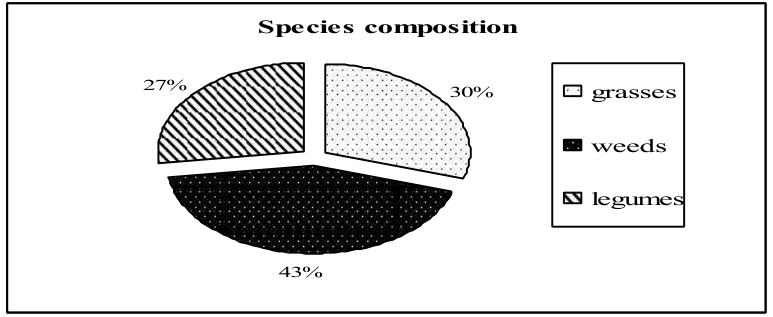
Figure 1: Botanical composition of natural herbage
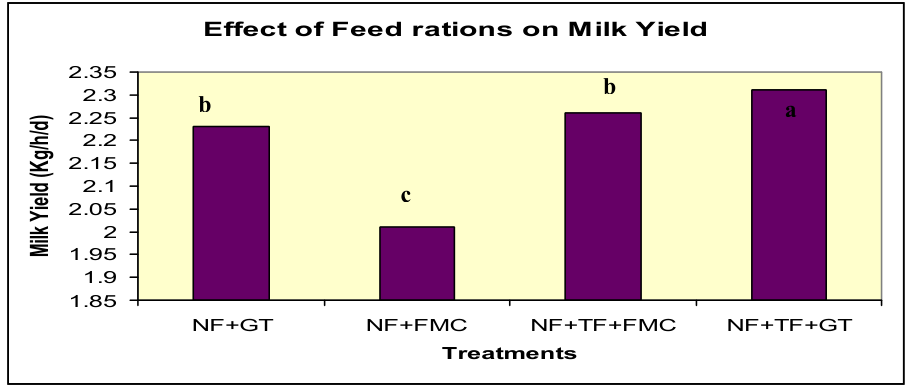
Figure 2: The effect of different rations on milk yield
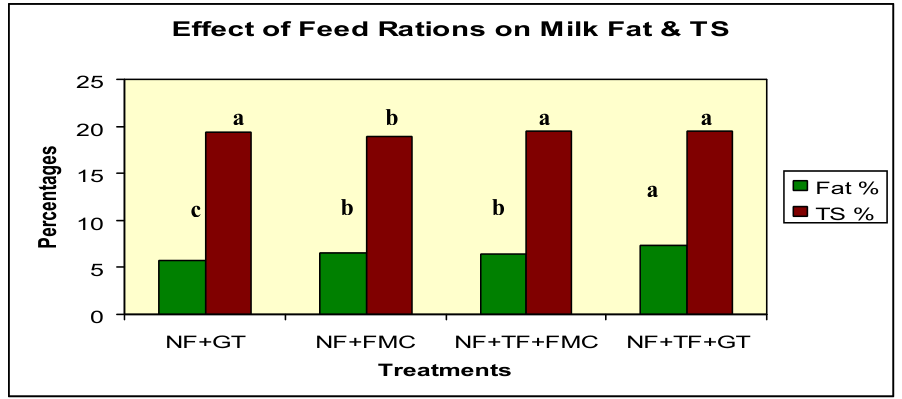
Figure 3: The effect of different rations on Percentages of milk fat and total solids.
Higher dry matter and crude protein intake of lactating buffalo cows fed nutritionally balanced low cost concentrate (GT) and tree fodder has been resulted a significant increase in percentage of milk fat as compared with cows fed normal farm made concentrate ration and tree fodder (Fig.3). El-Ashry et al. (1975) reported that the level of concentrates in rations for milk production from buffaloes has a significant effect on milk and fat yields and the efficiency of dietary energy utilization. Similarly, Khaltab et al. (1981) reported that, use of cheaper sources of nitrogen indicated that the urea can replace up to 50% total nitrogen of rations for lactating buffaloes with no adverse effect on milk or fat yield. Although not significant, similar dietary effect was observed with the percentages of total solids as well. According to Penno et al. (1999) supplementing a nutritionally balanced ration could increase the total solids which were directly proportional to the increase in metabolic energy supplied by the supplement.
Crude protein intake /cow were highest with FD+FMC+TF (T3) diet associated with highest dry matter intake (Table 2). However, highest milk total protein content was observed in cows in T4 which were fed FD+GT+TF diet. Similar dietary effect was observed with milk yield as well as with daily milk nitrogen output. As a result milk nitrogen efficiency was also highest in cows in treatment 4. Chase and Van Amburgh, (2006) reported that N use efficiency (MNE) of cattle can be improved through a combination of ration formulation and feeding practices. The MNE values in this study were far lower than that of sufficient values (>20) as indicated by Ishler, (2009). However, indications are that there is a room to improve MNE through appropriate supplementation. Findings of Kaufmann and St Pierre, (2005) suggested that in mature non –growing lactation cows, the N retention showed to be near zero because N intake and N output (milk N, urinary N and Faecal N) amounts are very close to equal. Therefore, an increase in MNE could be expected, if the quality of the diet improved, which has been the case in this study. Tree fodder provides minerals and N for the livestock microbial activity. Low cost concentrate (GT) with balanced nitrogen, energy and minerals have been improved the voluntary intake and digestibility. The highest MNE in T4 indicated that, low cost concentrate ration and tree fodder diet shared better efficiency in convert feed N to milk N, as compared with other diets. Therefore, profitability measured as income, and feed cost should be improved, when low cost GT and tree fodder are used.
Table 2: Effect of different rations on intake of dry matter, crude protein and milk nitrogen efficiency (MNE). | Ration | Dry matter (%) | Ash (%) | Crude protein (%) | Crude fiber (%) |
|---|
| Natural herbage | 20.5 | 8.7 | 9.2 | 24.2 |
| Low cost concentrate (GT) | 90 | 6.4 | 37.6 | 7.9 |
| Tree fodder (G.sepium) | 21.6 | 7.6 | 23.2 | 20.7 |
| Farm made concentrate (FMC) | 90 | 7.0 | 16.0 | 7.6 |
REFERENCES
AOAC, (1990). Official methods of analyses. American Association of Analytical Chemists, Washington D.C.
Chase, L. and M. Van Amburgh (2006). Understanding nitrogen use in dairy cattle. Manager, North East Dairy Business. News Letter, April 2006.
Devendra, C., (1987). Forage supplements in feeding systems for buffaloes. Buffalo J. 2: 93–113
El-Ashry, M. A., (1988). Impact of feeding and management on maturity in buffalo. Proceedings of II World Buffalo Congress. New Delhi, India, 1988. II: Part II, pp. 548–555.
Habeeb, G., A. Hameed and A. Akmal (2007). Current feeding management of peri urban dairy buffaloes and scope for improvement. Pakistan Vet. J. 27(1): 35-41.
Ibrahim, N. M. N. and D. E. F. Fernadez (1983). Productivity and nutritive value of different pasture species grown under coconut. Paper presented at the Third Annual Meeting of Australian Asian Fibrous Agric. Residues Research Network. University of Peradeniya, Sri Lanka 109-116.
Ishler, V., (2009). Enhancing nitrogen efficiency by lactating dairy cows. Http/ www. agriculture. state. pc. US.agriculture/ lib (browsed on 01 Aug. 2009)
Khaltab, H. M., M. A. El-Ashery, E. L. Serafy and A. M. E. L. Shoubokshy (1981). Effect of feeding different levels of urea on the production performance of milking buffaloes. Egypt J. Anim. Prod. 21(2): 155-166.
Kauffmann, A. J. and N. R., St- Pierre (2005). Effect of breed and concentrations of Dietary Crude Protein and Fiber on milk urea nitrogen. Research and Reviews: Dairy special circular 169-99, Ohio State University, USA.
Nguyen, X. B. (1997). The use of urea treated rice straw as ruminant feed collection of research works on agricultural sciences and economics 1967-1997. Hue University of Agriculture and forestry. Agri. Pub. House Hanoi, 157-160.
Pathirana K. K., U. L. P. Mangalika, M. S. De, Liyanage, and E. R. Ørskov (1996). Effect of grazing and supplementation in a coconut plantation on cattle production, coconut yield and soil fertility. Out Look in Agriculture 25: 187-192.
Penno, J. W., J. M. Mcgrath, K. A. Macdonald, M. Coulter, and J. A. S. Lancaster (1999). Increasing milk solids production with supplementary feeds. Proceedings of the New Zealand Society of Animal Production 59: 188-191.
SAS/STAT, (2005). User’s guide SAS Institute, Cary NC, USA.
Seresinhe, T. and. K. K. Pathirana (2000). Present status of cattle and buffalo farming in down stream Nilwala villages with unproductive acidic soils. Journal of the Sri Lanka Association for Animal Production. 1:16-26.
Seresinhe, T and K. K. Pathirana, (2007). Effect of season and supplementation on the utilization of natural herbage by grazing calves in the wet intermediate zone of Sri Lanka Ita. J. Anim.Sci 6(2) 516-519.
Seresinhe, T. and K. K. Pathirana (2009). Effect of supplementation of straw based diets on the digestibility and microbial nitrogen production of cross bred cattle. World J. Agri. Sci. 4 (6): 745-751.
Ranjhan, S. K. (1988). Feeding strategies for the utilization of cellulosic wastes and other industrial by-products for meat and milk production in buffaloes. Proceedings of II World Buffalo Congress. New Delhi, India II (Part II): 424– 437.
Zaki El-Din, M., K. El-Shazly, and M. Hassouna (1985). The relation between ruminal bacterial-N and diamino pimelic acid and bacterial activity on degrading this amino acid in farm animals. Egypt. J. Anim. Prod. 25: 297–309.